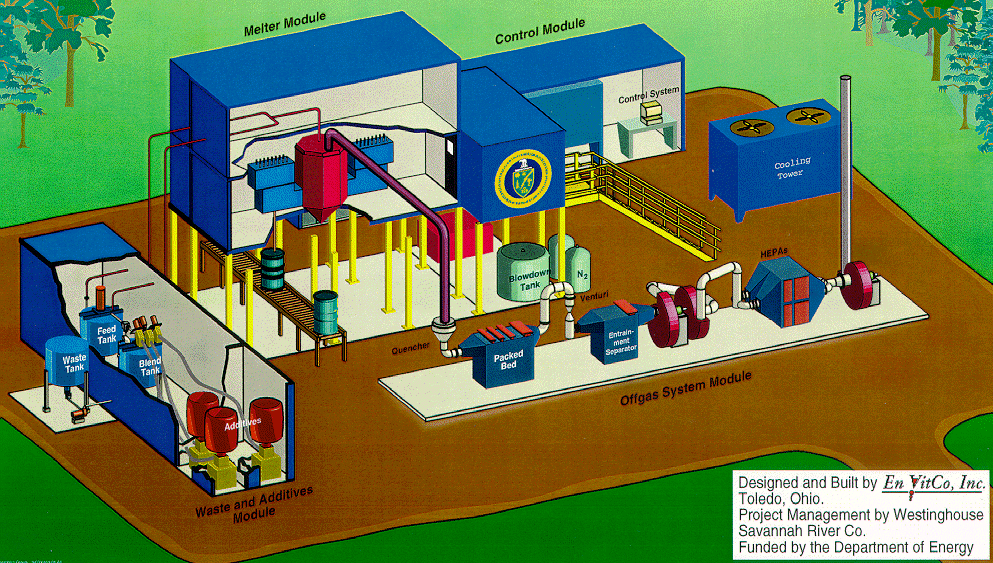
Fig. 1. Cutaway view of the
transportable vitrification system.
J. C. Whitehouse, P. R. Burket, D. A. Crowley, E. K. Hansen,
C. M. Jantzen, R. P. Singer, M. E. Smith, S. R. Young, and J. R. Zamecnik
Westinghouse
Savannah River Company
T. J. Overcamp
Clemson University
I. W. Pence Jr.
Georgia Institute of Technology
ABSTRACT
The Transportable Vitrification System (TVS) is a large-scale, fully-integrated, transportable, vitrification system for the treatment of low-level nuclear and mixed wastes in the form of sludges, soils, incinerator ash, and similar waste streams. The TVS was built to demonstrate the vitrification of actual mixed waste at U. S. Department of Energy (DOE) sites. Currently, Westinghouse Savannah River Company (WSRC) is working with Lockheed Martin Energy Systems (LMES) to apply field scale vitrification to actual mixed waste at Oak Ridge Reservations (ORR) K-25 Site. Prior to the application of the TVS to actual mixed waste it was tested on simulated K-25 B&C Pond waste at Clemson University. This paper describes the results of that testing and preparations for the demonstration on actual mixed waste.
During TVS acceptance testing, the TVS vendor, Envitco Inc., demonstrated the unit using a simple soda-lime-silica glass formulation. The TVS was then disassembled and moved from the vendor's facility to Clemson University. Clemson's Environmental Systems Engineering (CESE) Department was responsible for site selection, TVS setup and teardown, and simulated waste preparation. CESE selected a site just off campus on the grounds of The Institute for Wildlife Environmental Toxicology. A concrete pad and utility services were installed. The TVS was assembled in four weeks. WSRC and CESE then began an extensive equipment verification and testing program. Prior to heatup of the melter, CESE manufactured simulated waste based on a surrogate of K-25 B&C Pond Waste developed at Oak Ridge National Laboratory (ORNL) and modified by WSRC. The major components of the simulated waste were Si, Ca, Al, Fe, and K. RCRA (Resource Conservation and Recovery Act) regulated metals and Ce (to simulate U) were added to the waste surrogate. A glass formulation was developed which used Si, Li, and Na glass formers. The glass formulation was extensively tested in a series of crucible tests at Clemson. After successfully completing these tests the glass formulation was tested in an existing pilot-scale, joule-heated melter at CESE's Vitrification Laboratory. The purpose of the pilot-scale tests was to confirm that the glass formulation could be successfully melted and poured in a joule-heated melter. Once this was accomplished the TVS was operated using the same glass formulation. Operational problems were identified and corrected. The glass product, containing the simulated waste, from the crucible, pilot-scale and TVS testing successfully passed the Toxicity Characteristics Leaching Procedure (TCLP).
At the conclusion of the checkout testing program at Clemson the TVS was disassembled and shipped to the Oak Ridge K-25 site for demonstration with actual mixed waste.
INTRODUCTION
The stabilization and disposal of mixed wastes, which contain both hazardous and radioactive materials, is a significant waste management challenge to the Department of Energy (DOE). A large portion of these wastes have been shown to be suitable for treatment by vitrification through laboratory and small-scale melter demonstrations on both actual and surrogate wastes. The Department of Energys Office of Science and Technology tasked Westinghouse Savannah River Company (WSRC) to develop vitrification technology on a larger, "field" scale as part of its Mixed Waste Focus Area (MWFA) technology development program. WSRC is working with Lockheed Martin Energy Systems (LMES) to apply field scale vitrification to actual mixed waste at Oak Ridge Reservations (ORR) K-25 Site. Prior to the application of the Transportable Vitrification System (TVS) to actual mixed waste it was tested on simulated K-25 B&C Pond waste at Clemson University. This paper describes the test program, test results, and preparations for the demonstration on actual mixed waste. "Lessons learned" are included which may prove helpful for similar system startups. Results of some TVS testing activities are reported separately and referenced at the appropriate point in this paper.
The TVS is a large scale, fully integrated, vitrification system for the treatment of low-level radioactive and mixed wastes in the form of sludges, soils, incinerator ash, and other waste streams. The unit is designed to be transportable and easily decontaminated. Equipment is primarily housed in modules that can be sealed for over-the-road transportation. Major modules include Waste and Additives, Melter, Offgas, Control and Services, and Process Control Laboratory. The TVS modules, with the exception of the Process Control Laboratory, are shown schematically in Fig. 1. Waste to be processed is delivered to the Waste and Additives Module as either dry or slurried waste. While slurried waste is pumped directly to the Mix Tank, dry waste is dumped into the Waste Hopper where a screw feeder transports it to the Mix Tank. Glass-forming additives are supplied in bulk bag containers and transported to the Mix Tank by screw feeders. Water is added as necessary. The Mix Tank is placed on load cells to aid the operator in achieving the proper mix of waste and additives. An agitator in the Mix Tank homogenizes the feed. Once the batch is ready, it is pumped to the Feed Tank, which is also provided with an agitator. A recirculation loop transports the slurried feed to the Melter Module where a side stream is drawn off and metered for introduction into the melter.
The melter contains three refractory-lined chambers. The largest is the central processing chamber into which the feed is introduced. This chamber contains the primary electrodes. Slurried feed forms a "cold-cap" on the surface of the molten glass that helps to reduce emissions of volatile metals. Convective currents in the glass, set up by the electrodes, draw fresh material from the cold-cap into the glass pool where the vitrification process takes place. Glass is drawn through a refractory-lined "throat" into the glass drain chamber. A nuclear-level gauge allows control of the glass level in the melter by means of moving the spindle of a submerged drain valve. When this valve is open, glass drains by gravity into steel receptacles placed on a conveyor. After filling, the containers are allowed to cool and are removed by a forklift truck for storage or disposal. The third chamber, which has a separate drain mechanism, is designed to remove sulfates that may collect on the glass pool surface. The processing of some waste streams may result in the accumulation of metals in the main melter chamber; therefore, a third "metals drain" is provided for this eventuality.
Offgas from the melter is drawn off through a refractory-lined duct to the Offgas Module. This module was supplied by Anderson 2000, of Peachtree City Georgia. The unit consists of a quencher, packed bed cooler, variable throat venturi scrubber, mist eliminator, reheater, HEPA filters, and fans. Treated offgas is released through a 15 m (50 foot) stack, with provisions for Environmental Protection Agency (EPA) approved particulate and gas sampling.
Fig. 1. Cutaway view of the
transportable vitrification system.
The Control and Services Module contains the control room for the TVS, as well as the power supply and conditioning equipment for the melter. A standard programmable logic control system controls most of the operations of the TVS from the control room. The Process Control Laboratory is an independent trailer designed to perform analyses of low-level radioactive materials. Instruments include: inductively coupled plasma-atomic emission spectrometer, x-ray fluorescence spectrometer, scintillation counter, as well as sample preparation equipment.
The TVS modules (with the exception of the Process Control Laboratory) are designed to be broken down into containers which can be transported on standard, flat-bed trailers. The Melter module is broken down into five separate containers. The openings, which allow access between containers, are sealed with steel plates during shipment. To date, the TVS has been disassembled, shipped, and reassembled twice with no significant problems.
The TVS is more fully described in previous papers [1,2].
Testing Objectives
Prior to operation of the TVS on actual mixed waste a comprehensive series of checkout or "shakedown" tests were planned and completed. The overall purpose was to identify hardware and procedure problems and correct them. Specific objectives included:
TVS TEST PROGRAM PREPARATION
The commissioning of a large scale, first-of-a-kind system is a complex process. During the fabrication of the TVS, WSRC developed a plan to fully test the operation of the TVS under simulated field conditions, using a non-radioactive simulant of the first mixed waste to be processed at Oak Ridge. A team of WSRC engineers was formed to plan and supervise the shakedown test program. As the test program developed, the team was expanded to include personnel from Clemson, Georgia Tech, and Mississippi State universities.
Shakedown Site Selection
The first task of the team was to select a site for shakedown testing. Clemson University was selected as the site for the test program for the following reasons:
Site Preparation and TVS Setup
Site preparations began in May 1995. During this time the TVS was undergoing final fabrication activities at the vendor's facilities. In July 1995, the TVS vendor performed an acceptance test on the TVS using soda-lime-silica (SLS) glass. The scope and duration of the acceptance test were limited to a simple demonstration that the TVS could feed glass forming materials and produce a small amount of SLS glass. The acceptance test was completed on 7/28/95. Disassembly of the TVS began on 7/31/95 and was completed on 8/10/96. The TVS modules were shipped on 13 flatbed trailers over a period of two days from the vendor's shop in Erwin, TN to Clemson, SC.
Site preparations were completed prior to the arrival of the TVS at Clemson. A large concrete pad was poured on which to place the TVS modules. A concrete pad is not an absolute requirement for the TVS (concrete is only required under the melter module). However, Clemson planned to use the pad for a new laboratory facility after the TVS shakedown tests. CESE also arranged for the installation of utility power equipment to supply two, 800 amp, 480 volt services for the TVS. Potable water and sanitary sewer hookups were also provided, as well as telephone service. CESE also provided a compressed air system and office trailer.
Erection of the TVS modules began on 8/12/96 and was completed in four weeks. A 60-ton crane was required. No problems were encountered with the first field assembly of the TVS. Fig. 2 shows the TVS at Clemson.
Pre-Test Equipment Modifications
The next phase of the project was to perform previously planned system modification and upgrades. These changes were necessary to meet new program needs or DOE requirements. Upgrades installed at this time included:
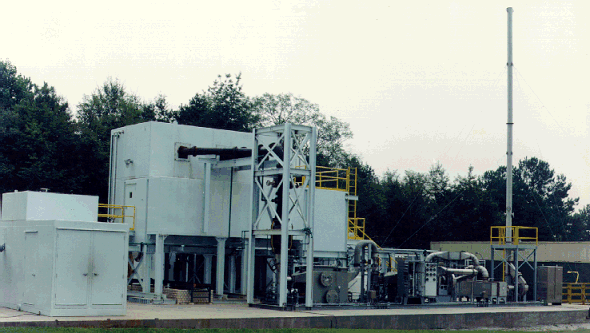
Fig. 2.Transportable vitrification
system shown (left to right) the waste and additives module, melter module, and
offgas system.
These modifications were completed by late November 1995.
Waste Surrogate Selection and Preparation
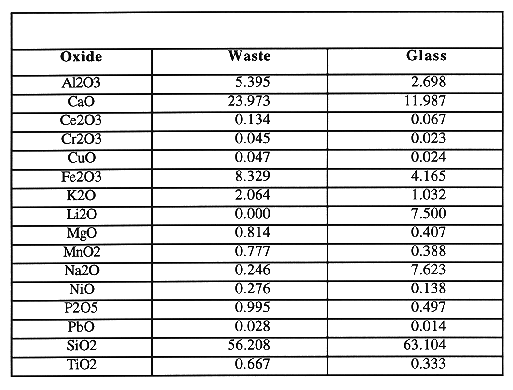
WSRC worked closely with LMES to select the first waste to be treated in the TVS. The waste selected was dried sludge from the K-25 B&C Ponds [3]. A surrogate for this material had been developed by Bostick, et. al. [4]. This surrogate recipe was modified slightly based on new data and a reinterpretation of Bostick's work by C.M. Jantzen and T.J. Overcamp. The target waste formulation is given in Table I. Jantzen developed a glass formulation for this waste in the SLS system. The formulation called for the addition of SiO2, Na2CO3, and Li2CO3 as glass forming additives. A target waste loading of 50% was selected. The target waste glass composition is shown in Table I.
Table I Target Surrogate Waste and Glass Composition (Wt. %)
One of the overall objectives of the TVS program is to validate the scaleup of mixed-waste processing from crucible tests, through pilot-scale testing, to field scale (TVS). Therefore, both crucible and pilot-scale tests were performed prior to the TVS shakedown tests. The crucible tests were performed on both actual and surrogate waste, and the results will be published shortly. Pilot-scale testing on surrogate waste was completed in November 1995. The pilot-scale tests were performed in CESE's Envitco EV-16 melter. This melter, although smaller, shares many features with the TVS melter (joule-heated, materials of construction, cold-top operation). Results from the pilot-scale work showed that B&C surrogate could be easily vitrified, forming a highly leach resistant glass (based on the standard Toxicity Characteristic Leaching Procedure), with no significant operational problems [5].
CESE manufactured over 25,000 pounds of dry B&C waste surrogate, most of which was used for the TVS shakedown. A double cone tumbler was used to mix the dry materials making up the surrogate. To avoid storing large amounts of this material, only enough surrogate for two or three days of operation was mixed at any one time. The surrogate was temporarily stored in "super sacks" then dumped into the TVS dry waste hopper as needed. Super sacks are reinforced cloth bags for dry bulk material handling. The TVS uses them for storing and supplying glass forming chemicals. In this application the super sack is suspended from a holding fixture and a cloth tube is released from the bottom of the super sack which allows the material to flow into a hopper. Extra bags were used for transferring waste surrogate from the tumbler to the waste hopper.
TVS Operations
Day to day operation of the TVS was accomplished by a team of WSRC engineers supported by CESE engineers and technicians. Generally, two WSRC engineers were assigned to each shift. Normally, TVS operation would be handled by technicians, however, we realized that the shakedown program would require extensive and timely engineering support. By utilizing qualified engineers on round-the-clock shifts we were able to make adjustments and corrections to hardware and software on a real time basis. This approach proved very effective. In addition to TVS shift operation, each engineer was responsible for a certain aspect of the TVS. The engineer responsible for a particular system wrote the procedures and test plan for that system. Through cross-training the other engineers were competent to make the required adjustments when problems arose in that system. Problems beyond their expertise were referred to the cognizant engineer, and the solution worked out, often over the telephone.
Overall shakedown activities were coordinated by a project manager. This person also served as the primary interface to LMES, DOE-SR, and the MWFA.
Shakedown testing of the TVS was performed in accordance with a Test Run Plan and TVS Shakedown Procedure. These documents specified the objectives of the shakedown, the sequence of tests to be performed, the composition of the surrogate waste, and the samples to be taken.
TEST PROGRAM RESULTS
Test Chronology
Following the pretest modifications mentioned above, melter startup began on 12/4/95. Heatup of the TVS was accomplished using the propane burner in the main chamber and the electrical resistance heaters in the vapor space of the two side chambers. Electrical conductivity and the commencement of joule-heating occurred 32 hours later when the glass in the melter became molten. Joule-heating allows for much greater heat input, and the melter main chamber reached operating temperature 12 hours after initiation of joule-heating. A further 36 hours was required to establish joule-heating in the glass drain chamber.
After melter heatup was complete, the first batch of soda-lime-silica (SLS) glass was prepared. The Test Plan called for feeding and pouring a small amount of SLS before shifting to B&C surrogate. Problems with the mechanical seal on one of the slurry pumps delayed initial feeding of the melter for seven days. The problem was traced to incorrect installation of the mechanical seal at the pump manufacturer's facility. During this delay the melter was maintained in "hot hold" mode at about 1250°C.
Slurry feeding of the melter commenced on 12/19/95. Slurry feeding continued for only a day when operation was halted by the failure of the slurry pump inboard thrust bearing. The pump was removed and returned to the vendor's shop for replacement of the bearing assembly with a larger unit. The TVS was cooled down and placed in cold standby two days later to await the return of the repaired pump.
The second startup of the TVS at Clemson began on 1/17/96. Only 2.5 days were required to reach normal operating temperature throughout the melter. This was accomplished by temporarily allowing dilution air to enter the offgas system. The previous startup had shown that the offgas system blower was oversized for this application. This was particularly apparent during melter heatup when excessive quantities of ambient air were drawn through the melter, thus removing heat.
Makeup and feeding of SLS batches commenced. Numerous nuisance problems were encountered with the slurry feed system. The system consists of a vaneless slurry recirculation pump which maintains a flow of about 2 liters/s (30 gpm) in a loop from the feed tank in the waste module to the melter module and back to the feed tank through a pressure control valve. This valve is used to maintain sufficient back-pressure so that a steady side stream can be drawn off from the recirculation loop. This stream (less than 0.1 liter/s or 1 gpm) passes through the feed control valve to the melter. Problems in the slurry system were primarily due to the inability of this pneumatically operated pinch control valve to maintain a steady flow of slurry to the melter. Variations of +/- 100% were common. Periods of low flow often resulted in plugging of the slurry feed tube. This was caused by radiant heat from the molten glass which produced rapid drying out of the slurry in the feed tube under low or no flow conditions.
Initial attempts to pour glass from the melter on 1/26/96 were unsuccessful. Glass pouring is accomplished from a side chamber using a water cooled drain probe. The molybdenum tip of the drain probe mates with a molybdenum orifice. When the drain probe is raised, glass is allowed to flow through the orifice and fall into the waste container. The problem was easily rectified by increasing the glass drain chamber temperature to about 1200°C.
After feeding three, 900 liter (240 gallon) batches of SLS, the feed material was switched to surrogate B&C pond waste. Slurry with up to 60% solids loading was successfully mixed and fed to the melter. With the establishment of a cold-cap of unmelted feed on the glass surface, we were able to maintain glass temperature of 1250°C with about 30% less electrical power than in hot hold mode.
Feeding and pouring of B&C surrogate continued until an uncontrolled glass pour occurred on 1/31/96. Initial efforts to stop the flow of glass from the glass drain were unsuccessful. The glass flow was finally stopped by manually inserting the glass drain probe to a position 13 cm (five inches) below normal shutoff position. Compressed air was then used to "freeze" the glass drain so that the probe could be removed. The melter was kept in hot hold for five days while a new drain probe was manufactured and installed. Examination of the failed probe revealed that the molybdenum tip had separated from the water cooled portion of the probe. A design change was made to reduce the possibility of this occurring again. With the new probe installed, normal operations resumed.
Molybdenum is susceptible to rapid oxidation at temperatures above 700°C. Normally the molybdenum parts extending outside the melter are purged with nitrogen gas in areas where their temperature can exceed this limit. The emergency procedure used above caused extensive oxidation of that portion of the drain orifice assembly normally purged by nitrogen. Also, the drain orifice assembly had been damaged when attempts to reseat the drain probe were made with excessive force. Unlike the drain probe, the drain orifice assembly cannot be replaced with the melter hot. The damage to the drain orifice assembly interfered with glass pouring during the remainder of the shakedown testing. The unit was replaced with an improved version prior to operation at Oak Ridge. To eliminate the possibility of excessive force on the drain probe, an existing load cell in the drain probe linkage was repaired and calibrated. This load cell had been inoperative during the shakedown tests.
Feeding and pouring of B&C pond surrogate continued toward the objective of processing three melter volumes of glass. During the week of 2/19/96 personnel and equipment from the Diagnostic Instrumentation and Analysis Laboratory at Mississippi State University performed numerous diagnostic tests using advanced instrumentation. Techniques included Laser Induced Breakdown Spectroscopy of the glass pour stream and offgas, Fourier Transform Infrared Spectroscopy of the offgas, various pyrometry and video techniques for mapping glass surface and glass pour temperature, and Laser Doppler Velocimetry of the offgas stream. The last technique was also used to measure relative particle density in the offgas from the melter, which was used to reduce carryover of feed particulates by variation of melter/feed operating parameters. Results from these tests are documented elsewhere [6].
On 2/23/96 the B&C surrogate test was completed after mixing and feeding 24 batches of melter feed. A total of 11,589 kg (25,550 pounds) of glass, representing 2.94 melter volumes, were produced from 7604 kg (16,763 pounds) of dry simulated B&C waste. The melter was then "flushed" with batches made up from SLS glass formers. After six batches of SLS we switched to recycled bottle glass , which increased the throughput rate approximately five fold. Approximately 5400 kg (12,000 pounds) of glass were made during the flushing campaign. Flushing was performed because crucible tests had shown that the B&C surrogate glass could devitrify if cooled slowly, i.e. at the melter cooldown rate. Devitrification is the process of forming crystalline substances under slow cooling conditions, such as might occur in a melter cooldown. The main crystalline components found in the crucible tests were lithium silicate and calcium silicate (wollastonite). Devitrification is a problem in the melter because some devitrified materials have melting points above the capability of the melter. Should large quantities of these substances form during cooldown they would have to be removed mechanically.
Melter cooldown commenced on 3/7/96 and was completed two days later.
Material Handling Problems
Potential material handling problems are often overlooked in the development of large-scale waste treatment equipment. During shakedown of the TVS, problems were encountered with dry waste and glass additives handling as well as slurry system operation. Although these problems were eventually overcome they caused the majority of the delays and could have been avoided if more attention had been paid to properties of the materials during the design stage.
The TVS uses a screw auger to transport dry waste material from an external hopper to the mix tank located inside the Waste and Additives module. B&C surrogate is a low density, powdery material. Considerable problems occurred with "bridging" of this material in the hopper, which starved the auger. Installation of a mechanical vibrator on the lower, sloping side of the hopper helped somewhat. However, excessive use of the vibrator caused packing of the material, allowing cavities to form within the hopper, again starving the auger. After the shakedown tests, "air blasters" were installed which provide jets of air through the material. These units, in combination with the vibrator appear to have solved the bridging problem. Efforts are now centered on developing methods for moving the dry material from storage drums into the hopper using a vacuum system. Material is sucked through a large diameter hose to a cyclone separator placed on top of the hopper. The cyclone separator allows the material to fall into the bin. The cyclone separator is connected to a HEPA vacuum. The hopper has been completely sealed, except for the discharge spout (which connects the top of the auger tube to the mix tank). Unfortunately the discharge spout allows air to bypass the vacuum hose when the level in the hopper is very low. A slide gate will be installed on the discharge spout to eliminate this problem. Another useful feature would be the ability to vary the speed of the auger.
Three separate screw augers are used to transport glass additive materials from small bins to the mix tank. Similar problems with cavity formation occurred, particularly with the low density precipitated silica used as one of the glass formers. Installation of small, air driven, mechanical vibrators on the bins helped solve the bridging problem. However the auger was unable to efficiently transport the material. The style of auger originally used has a hollow shaft. That is, the auger consists of a flat spiral without a center spine. After consultation with the vendor, the augers were modified by inserting 1.9 cm (three-quarter inch) polyvinylidene fluoride tubing in the center of the spiral. This modification, together with reduced auger rotation speed, greatly increased the ability of the system to transport low density materials.
One of the most important factors that limits the operation of the TVS is the rheological characteristics of the slurry. The slurry is made by adding waste and glass forming additives to water in the mix tank. The blended material is then transferred to the feed tank from which it is recirculated to the melter module. During mixing of the B&C surrogate with glass formers, mixing and pumping problems became evident when adding glass formers that had high surface to volume ratios (i.e. low density materials). When using these materials (e.g. precipitated silica), maximum total solids in the slurry was limited to 25%. High surface to volume ratio materials have been shown to increase melt rate and waste loading [7], but this must be balanced against limitations in solids loading. Increased melt rate was more than offset by the extra energy (and time) required to vaporize the additional water required. An optimal material, fused silica, was found which allowed solids loadings of up to 60% with sufficiently high melt rate and waste loading (50% or more).
Problems with the melter slurry feed control valve were mitigated by installing a smaller control valve and by careful adjustment of the parameters in the PID (Proportional Integral Derivative) control loop. Frequent plugging of the small diameter melter feed line was corrected by installing an automated water flush system. This system flushed the feed line with a preset amount of water whenever loss of slurry flow was detected.
Melter Improvements
Problems with the glass draining system have already been discussed. Also discussed was the issue of excessive air leakage into the melter which reduced the efficiency of the unit. Two steps have been taken to correct this problem. The first involved sealing up as many air in-leakage paths to the melter main chamber as possible using refractory materials. This resulted in an increase in melter vacuum from 60 to 450 Pa (0.25 to 1.8 inches of water). However, increased vacuum can cause increased emissions from the melter (due to entrainment of feed particles in the offgas), so a balance must be achieved that maintains sufficient vacuum to ensure in leakage of air to the melter at all times while minimizing melter emissions. The second step, now underway, is the installation of a variable speed drive on the main offgas induction fan. This combination will allow operation with less air inleakage with an operating vacuum of 125 to 250 Pa (0.5 to 1.0 inches of water). Tests have indicated that gains of up to 60% in the glass melting rate can be obtained with these modifications.
Glass Canister Thermal Tests
Because devitrification of the glass product can result in poor wasteform performance (higher RCRA metal leach rates), and devitrification has been shown to occur in crucible tests of B&C surrogate waste, a test of glass canister cooling rate was performed. As part of the TVS program, a special waste container was designed in the form of an open top cube, 61 cm (24 inches) on each side. The cube is divided into four quadrants each 30 cm by 30 cm (12 inches by 12 inches). The purpose of the quadrants is to ensure complete filling of the container with molten glass. The cubical configuration maximizes packing of the containers at storage or disposal sites. Two test cubes were instrumented with thermocouples and filled with glass during the shakedown testing. A standard 55-gallon steel drum was also instrumented. Results of these tests showed that both containers cooled fast enough (in ambient air) to prevent significant devitrification [8].
Offgas Emissions Control System
Relatively few problems were encountered with the offgas system. Measurements of particulate and metals emissions confirmed that the system was operating satisfactorily. However a larger than expected accumulation of solids in the packed bed cooler was noted. The packed bed cooler is the second stage of the offgas system, immediately after the inlet offgas quencher. Solids accumulation can be reduced by increasing agitation within the packed bed cooler sump to ensure this material is carried out with the blowdown stream. This could be accomplished with an eductor or mechanical stirrer.
RECENT EXPERIENCE AT OAK RIDGE
While the primary purpose of this paper is to discuss TVS results from the shakedown testing at Clemson, recent experience at Oak Ridge has yielded significant additional information on melter operation. Prior to commencing actual waste processing at Oak Ridge, the TVS was again operated on surrogate waste in order to confirm the system was correctly setup and to train operators. This testing proceeded relatively smoothly until, on 11/5/96, a glass leak developed. At the time of the leak the TVS was being "flushed" with bottle glass in preparation for cold shutdown. The leak caused extensive damage to wiring and cooling hoses. Initial investigations show no unusual refractory wear. It is believed that the leak occurred when the gap between two refractory blocks opened due to repeated thermal cycling. Further analysis awaits the disassembly of the melter. DOE has elected to replace the entire melter refractory prior to operation with actual mixed waste. The new refractory will incorporate design changes to minimize the potential for a similar glass leak. Also, operating procedures will be revised to ensure the binding steel, which holds the refractory blocks in place, is adequately tensioned during all phases of operation. The repairs are expected to be complete, and the TVS back in operation, in May 1997.
CONCLUSION
The Transportable Vitrification System was successfully tested on a surrogate of the first waste planned for treatment at Oak Ridge. Several problems with material handling, melter feeding, and glass pouring were identified and, in nearly all cases, corrected. The objectives of the test program were met. Final modifications to the TVS are now underway in preparation for the treatment of actual mixed waste at Oak Ridge.
Some findings from the test program include:
ACKNOWLEDGMENTS
The information contained in this paper was developed during the course of work under Contract No. DE-AC09-89SR18035 with the U.S. Department of Energy.
REFERENCES