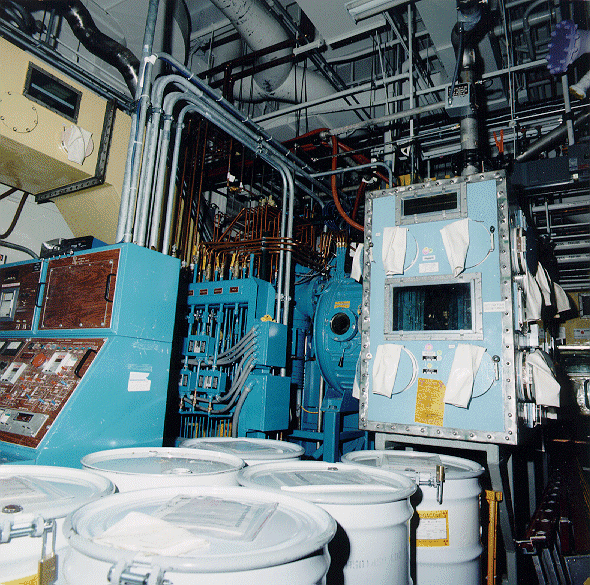
FIG. 1. A glovebox with auxiliary
equipment, typical of those decommissioned by the project.
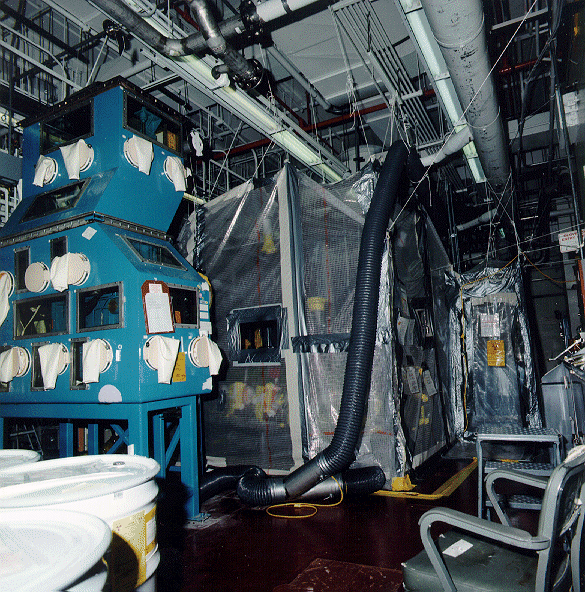
FIG. 2. Soft-sided secondary
containment, typical of that used by the project.
Timothy J. Humiston
Rocky Mountain Remediation Services,
L.L.C.
P.O. Box 464, Golden, CO 80402-0464, a member of the Kaiser-Hill,
L.L.C. Team at the
U.S. Department of Energys Rocky Flats Environmental
Technology Site, Golden, Colorado
ABSTRACT
Five glovebox systems were decommissioned from Building 707 at the Rocky Flats Environmental Technology Site (the Site) to make room for a new packaging and stabilization process line. Methodology, equipment developments, and lessons learned are presented. The greatest challenge for the project was to decommission the gloveboxes and simultaneously keep the area fully functional, (e.g., off respiratory protection) so the building operations personnel could perform plutonium thermal stabilization. The decommissioned gloveboxes were attached to the same glovebox system as the one used for stabilization. One of the resulting project constraints was that no in-situ glovebox size reduction was allowed. The gloveboxes were therefore, removed whole and transported to a remote size reduction facility. This was due to the requirement to keep the stabilization process operational. Several innovative pieces of equipment resulted from this constraint, including: specialized window and bracket assembly for breach-less window changes, internal glovebox isolation devices, and a glovebox flange attachment that allows a breach-less new glovebox installation after attachment. To keep radiation exposure and radiological contamination to As Low As Reasonably Achievable, strippable coatings were used. A valuable secondary benefit was that the coated gloveboxes were reduced from transuranic to low level waste with the application and removal of two coats. Direct radiological measurements were taken inside the gloveboxes with a Ludlum® 12A combined with a 10% efficiency probe before and after application. The result was a decontamination factor of greater than 10, enough to bring the gloveboxes into the low level waste category.
INTRODUCTION/BACKGROUND
This project was performed at the Rocky Flats Environmental Technology Site (the Site) in Jefferson County, near Golden, Colorado. The Site was formerly known as the Rocky Flats Plant where nuclear warhead components were fabricated and shipped to other facilities in the Department of Energy (DOE) Complex for assembly into weapon systems. In late 1989 the Plants operations were curtailed for inventory and to implement a new safety culture. This was coincidentally the same period that the Berlin Wall came down and soon to follow, the Cold War ended. This ended the need for production nuclear weapon manufacturing and the former mission of the Plant. The Plant was renamed the Rocky Flats Environmental Technology Site to reflect the new mission.
The purpose of the project was to decommission (or strip out) a portion of a former process area to make room for the Plutonium Stabilization and Packaging System Prototype. The new system converts actinide oxides and metals to a stable form and puts them into laser sealed stainless steel containers for long-term storage. The system is a prototype for others that will be installed at various DOE sites. Building 707 was chosen because the systems and personnel in the building have recently been through the new DOE process of resumption of operations and Operational Readiness Review (ORR). The resumption and ORR were originally performed for Thermal Stabilization. The systems in the building are routinely checked and maintained and emergency drills are performed. The personnel supporting operations are trained and qualified to the new DOE Conduct of Operations culture. The location within the building was chosen for the new system due to its proximity to stabilization furnaces, material conveyance systems, and storage vaults.
In an earlier independent effort the Kaiser-Hill Team negotiated the Davis Bacon determination for performance of all decommissioning activities at the Site, with the Department of Energys Rocky Flats Office. The result was that the Rocky Flats Steelworkers, who used the buildings and equipment, could use their experience and knowledge to perform the decommissioning of those same buildings and equipment. In that same time period a special Decommissioning Worker classification was negotiated into the Union contract to allow for more flexibility. This contract change allowed different crafts to perform certain decommissioning functions, regardless of craft category.
The scope of the project was to remove and ultimately size reduce five gloveboxes from an active system in the process area, also known as Module J ("the module") in Building 707. The size of the module was approximately 12 by 21 meters with the five gloveboxes occupying approximately half the space. The module was formerly used for plutonium metal casting and thermal stabilization of metal fines. Several unique challenges were encountered during the project. One of these included the project constraint that thermal stabilization operations must continue simultaneously with decommissioning activities in the module. This required that the module be kept from being posted as a Radiological Contamination Area during operations. The thermal stabilization operations were being conducted in gloveboxes attached to the same system as those being removed so creative isolation devices were employed. Furthermore, since large monetary incentives were riding on the completion of these thermal stabilization operations, the risk of module contamination was required to be kept extremely low. Because of this, the customer would not allow in-situ glovebox size reduction. This forced the project to remove the gloveboxes whole, and crate and stage them to be size reduced at a separate facility. In one case there was less than five centimeters (cm) clearance in getting the glovebox out of the module to the dock for crating.
One of the five glovebox systems, a bottom-pour, induction heated casting furnace, was not radiologically contaminated. To save money and minimize waste generation, an off-site DOE Complex customer was located for the system. The challenge for this system was to salvage as much as possible. The three foot furnace door vertically retracted on a pneumatic rail system into a "dog house" glovebox. There is 5.5 meters of space from the module floor to the concrete double-tee slab ceiling, where the lifting apparatus was attached. All lifting components were engineered to minimize the vertical space occupied. During the lift to separate the "dog house" glovebox from the main glovebox, there was less than three centimeters clearance between the furnace rail and the "dog house."
The project was formulated and executed in the classical manner with a few Rocky Flats/DOE special exceptions. All new equipment components that were permanent installations to the existing gloveboxes and certain utilities were purchased and installed as vital safety system components, requiring material pedigree and suppliers with approved Quality Assurance Programs. In addition, work control was maintained through the Sites Integrated Work Control Program (IWCP) by signature verified step completion, plan-of-the-day meetings with staff, and pre-evolution briefings with craft. These and other requirements were performed under the Sites recently implemented Conduct of Operations. The IWCP Work Packages required careful planning and engineering with multi discipline, safety, and independent nuclear safety reviews and approvals prior to initiation of work. All activities were evaluated against the facilitys authorization basis documents (e.g., Building 707 Facility Safety Analysis Report). Building Management was kept apprised of all daily activities before and after completion, in addition to the work package review and sign-off.
Radiological work control was achieved through compliance with the Sites Radiological Control Manual (which implements the Code of Federal Regulations [CFR] 10 CFR 835 requirements). Features of this program include: radiological work permits, As Low As Reasonably Achievable (ALARA) radiological exposure work reviews, and training and qualification to applicable standards. During the planning and work package preparation phase, a radiological breach list was prepared and used to determine the containment required for contamination control. A list of commercially available or specially designed glovebags was developed and the items purchased. A combination of glovebags, sleeving, and sheeting was used in the project. Application of a strippable coating was used inside and outside the gloveboxes for reduction of contamination levels and clean-up activities. The project constraint requiring the removal of gloveboxes whole initiated a new breach-less method for changing the lead impregnated glovebox windows with non-leaded polycarbonate to avoid the transuranic (TRU) or low level "mixed waste" storage requirements. Mixed waste is defined as waste that is radiologically contaminated and hazardous. The design and methodology for these window changes are described later in the Discussion section.
DISCUSSION
Glovebox Removal Sequence
A glovebox, representative of those removed in the project, is shown in Fig. 1. Strip-out of these gloveboxes followed a basic sequence. All planning and control documents were completed, including engineering and work control packages. All non-ventilation utilities were then isolated via lock out, tag out, were drained and removed. After electrical service and conduit was removed, the control consoles and large panels were cut-up, crated, and removed. All piping and manifolds were then removed along with the furnace pumps, until the only part that remained was the glovebox with its supply and exhaust ventilation and lead shielding. All other external radiation shielding was removed.
After the external equipment and services were removed and the area around the glovebox was cleared, a soft-sided containment (SSC) was constructed. An example of this is shown in Fig. 2. This containment was required to reduce the risk of spread of radiological contamination and to comply with the Lead Compliance Plan. In addition, since a small percentage of asbestos was identified in the lead shielding adhesive, the SSC was used for asbestos abatement. A hard-walled containment is normally more desirable than an SSC. In this case however, the space restrictions in the module and routine access required by personnel performing thermal stabilization, prevented their use.
Removal of the lead shielding was the next step. The Lead Compliance Plan required that high flow personnel samplers (e.g., Gillian® lapel samplers) be used for the workers involved in lead removal. These samplers were also used for asbestos abatement. Due to the method of removal, which included chisels, power chisels and utility knives, the results of the personnel sampling were below the 29 CFR 1926 (Building, Construction, and Decommissioning Standards) action levels in all cases. Therefore, future lead removal will not require soft sided containment or lapel sampling, provided that non-dust generating methods are employed for removal.
The glovebox was then ready for separation from the central conveyor ("centerline") glovebox. Prior to this point, strippable paint was applied to the inside of the glovebox, removed, and reapplied. This is described later in the ALARA Considerations section. Sleeving was used for contamination control at the glovebox to be removed-to-centerline flange. First, two hydraulic, foot pedal control, lift tables were placed under the glovebox and raised to meet the floor. Next, the glovebox support legs were removed, followed by removal of the flange nuts and bolts. A sheet of plastic was then converted to a sleeve around the glovebox flange and taped to the gloveboxes on each side of the flange. Enough sleeve was bundled up so that a two to four foot separation could be achieved. The two gloveboxes were then pried apart from the inside and separated. The sleeve was bundled together in the center, taped, and cut. This operation is similar to the umbilical cut (or "bag-in or -out" of material and equipment) used routinely on gloveboxes. A light gage sheet metal blank was then attached to the removed glovebox. The inside surfaces of the centerline near the old glovebox were then hand painted with strippable paint. To attach the new centerline blank, a frame supported glovebag was tried. This method proved to be difficult and cumbersome, resulting in higher risk of radiological contamination release. For this reason, a better method was devised. A device, consisting of a clear sheet of plastic with glove sleeves strategically placed, was designed and procured from a commercial glovebag manufacturer. This device was fastened to the bottom of the flange around the plastic remaining from the glovebox separation. The old sleeve was then peeled away from the bottom of the flange and the gasket and blank were then loosely bolted over the flange. The new device was then removed and the old plastic sleeve removed from the inside,
using the centerline glovebox gloves for access. The flange, blank, and gasket were then decontaminated, and painted.
A new glovebox flange attachment was also designed for the project. It was deployed in the same manner as described above for the blank, except the center is missing, like a picture frame. This flange attachment secures the gasket to the flange and has provision for fastening a light gage sheet metal blank over the top. When the new glovebox is installed, the light gage sheet metal blank is removed and the glovebox fastened directly to the attachment. The gasket on the inside of the picture frame attachment is then cut out from the inside of the new glovebox. This eliminated a radiological breach (to remove a full blind flange) for the new glovebox installation.
FIG. 1. A glovebox with auxiliary
equipment, typical of those decommissioned by the project.
FIG. 2. Soft-sided secondary
containment, typical of that used by the project.
The traditional method of window replacement at the Site removed windows without sleeving or glovebags. This required an open hole breach. For decommissioning utilizing in-situ size reduction, the windows would be removed one-by-one with the dissection of the glovebox. For this project the gloveboxes were removed whole and staged until size reduction was performed. To eliminate the need to manage the removed gloveboxes as mixed waste, the lead shielding and leaded windows were removed prior to crating and shipping to the staging facility. The craft workers developed a creative new method for changing windows for this purpose. The window change is breach-less in the sense that there is no open hole breach during the operation. Localized containment is present at the window during the entire operation. Fig. 3 shows one of the new configuration windows after installation.
For these window changes, it was desirable to have the gloveboxes on lift tables so they could be raised or lowered depending on the windows location on the glovebox. This allowed the workers direct, level-arm access to each window, without the need for scaffolding. The window change with this new method was relatively simple. First, a portable air mover and intake HEPA filter was installed onto the now separated glovebox. The glovebox was adjusted to the appropriate height. The window retaining clamps were removed from the window. A sleeve was then fabricated to fit the opening and installed. The existing window was then pried away from the glovebox from the inside with a simple "putty" knife into the sleeve. The window was then "bagged-off" using a simple umbilical cut. The new window, which is slightly larger than the opening with a standard "P" gasket already glued on, is then placed over the opening and remaining sleeve. Fig. 3 shows the bracket that is used for securing the window to the glovebox. The bracket, installed on the inside-glovebox window surface, has a bolt welded to it that penetrates the window. A rubber washer, steel washer, and wing nut are installed on the outside of the window. The bracket is then turned 90 degrees (two brackets are shown in their final vertical position inside the window in Fig. 3) and the wing nut tightened. The original sleeving is removed from inside the glovebox, the window tightened further, leak checked, and taped. Up to three brackets are installed, depending on the long-axis length of the window. Each complete window change took approximately two hours.
Contamination Control Ventilation
Ventilation for the soft-sided containment was achieved by using a 28 cubic meters per minute (cmm) portable air mover equipped with two stages of High Efficiency Particulate Air (HEPA) filtration. Each stage consisted of a 61 cm by 61 cm by 30 cm thick HEPA filter. The air mover filtration efficiency was verified using a Site standard test with either di-octyl phthalate or peanut oil, representing the 0.3 micron smallest plutonium particle size. This testing met the intent of the requirements in DOE Order 6430.1A, General Design Criteria, for exhausting Zone I glovebox or potentially contaminated air into the Zone II process area air that the workers are breathing.
Due to the size of fan required to move 28 cmm through two stages of HEPA filtration, the noise within five feet of the air mover was approximately 96 decibels (dB). Hearing protection was therefore, required for workers in the module. To eliminate this requirement, a noise reduction device (muffler) was developed. The muffler consisted of a rectangular cross-section metal housing with two plates along the long axis of the housing, creating three relatively square "tunnels" for the exhaust air to pass through. These "tunnels" were then lined with sound-proofing insulation foam. The two rectangular ends of the housing were transitioned into a 25 cm diameter round cross section so that standard "elephant trunk" hose could be employed on both ends to direct the flow of exhaust away from the workers. This muffler design effectively reduced the exhaust air noise to approximately 75 dB, thereby eliminating the need for
hearing protection. The portable air mover used for the window change operation was much smaller than the one used for the soft-sided containment. The smaller unit utilized a 30 cm by 30 cm by 15 cm thick
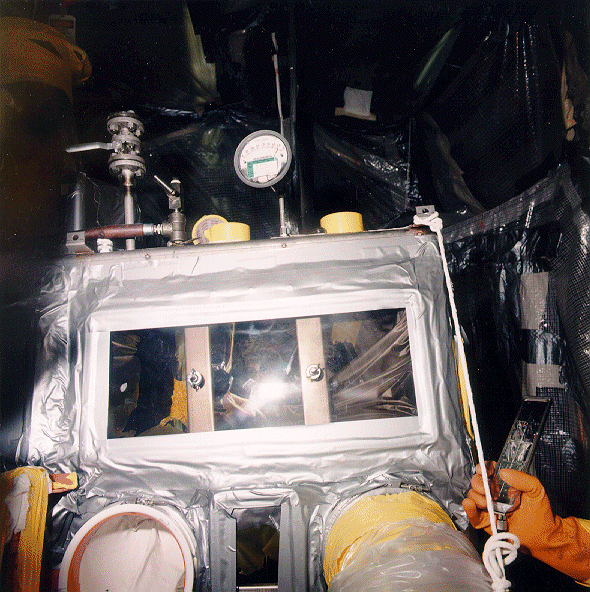
FIG. 3. Breach-less window after
installation, showing vertically oriented fastening brackets.
HEPA filter for each of two stages. This unit provided adequate airflow and maintained the glovebox negative at greater than 25 millimeters (mm) water column. A "Y" was installed in the elephant trunk hose and the air mover provided negative and airflow to two gloveboxes simultaneously.
Waste Management
As part of the initial project documentation, a Sampling Plan was developed for all liquids, paints, and lead shielding adhesive. Process knowledge was used when possible for characterization. The results of the execution of this plan were used for hazardous waste characterization and disposition. A Waste Management Plan was also developed to address the movement, non-destructive assay, and storage of crates and drums generated by the project. Forms known as Non-Routine Waste Origination Logs were used to specify the wastes origin and how it was to be packaged. This information was then transferred to a Waste Traveler form as the waste containers were filled. Upon completion, the filled containers were then sent to the appropriate non-destructive plutonium assay and "final" storage location.
The gloveboxes that were removed whole and then crated required special handling and characterization. The over-sized crates generated by the project could not be assayed for plutonium by the Sites standard crate counter due to their size. The standard crate counters determine the actinide content and then classify/characterize the waste as either low level or transuranic based on the net weight of the item. For this reason, another waste classification/characterization method was developed for the over-sized crates.
Waste management ended up being one of the greatest challenges for the project due to the volume of documentation, special packaging and assay, and lack of storage or staging space at the Site. A paper devoted entirely to this subject, "The Impacts of Decontamination and Decommissioning Activities on Waste Management Practices at the Rocky Flats Environmental Technology Site," written by Aycock and Dorr, can also be found in the WM `97 Conference Proceedings.
ALARA Considerations and Waste Characterization
To reduce the risk of radiological contamination spread or personnel intake, special containment was used for each breach. In addition, to further reduce the total activity inside the gloveboxes, strippable coatings were applied. The Project used Sanchem® Stripcoat TLC Ammonia Free® for these coatings. Prior to using the coating process however, a special Criticality Safety Operating Limit (CSOL) had to be developed. This was due to the high hydrogen content polymers in the coating. Special instructions were developed for the removal of the coating, and included in the CSOL.
Prior to applying the coating, all equipment was removed from the glovebox. The glovebox was then wiped with damp paper wipes and all resulting waste removed. An airless sprayer hose and gun were then "bagged into" the glovebox through a plastic sleeve. The internal surfaces were sprayed and the coating allowed to dry. Prior to spraying, the gloveboxes were surveyed with an air proportional counter (e.g., Ludlum® 12A) with a probe designed to be 10% efficient. The resultant readings "pegged" the instrument. This indicates the activity levels were greater than 10 million disintegrations per minute (dpm). After the second coating was removed, the readings were between one and ten million dpm. A final coat of paint was sprayed inside the glovebox to lower the risk of contamination spread during transport and for the size reduction crew.
The survey numbers at various points in the glovebox were applied uniformly to the surface and then used to calculate the total activity of the glovebox for waste characterization purposes. Typical radiological engineering calculations were used for this characterization. The outcome was the gloveboxes were classified as low level waste (less than 100 nano-curies activity per gram of waste). This method of characterization was new to the Site and therefore, was still being reviewed for wide-spread application at the time of publication. Use of this method is essential for the efficiency of future decommissioning activities.
The strippable coating and decontamination factor measurements/calculations provided two important lessons or points for consideration. The first is that the thickness of strippable coating greatly effects the decontamination factor. One coat, properly applied and removed could have performed the reduction in activity needed to bring gloveboxes into the low level waste category. The second point is that higher count capability instrument/probes need to be developed. Based on the density of stainless steel, up to 70 million dpm, applied over the entire surface, may be allowed on the glovebox and it could still be considered low level waste. Pursuit of an instrument/probe that can measure up to 100 million dpm was underway at the time of publication.
To perform the strip coating operation, a special isolation device was designed and implemented by the project team. It consisted of six plexiglass panels held together by a piece of three centimeter diameter conduit that was secured to the centerline glovebox by spanning the opening between gloveports on each side. Standard conduit hold-down clamps were used to secure the panels. A specially designed fixture was used to secure the conduit to the gloveport opening, inside the glovebox. Deployment of this device was done by "bagging-in" the pieces through 25 cm diameter gloveports. The panels served four main functions. They provided a good contamination barrier between the highly contaminated centerline and strip-coated glovebox to be removed. The individual panels do not provide an air tight seal, so negative pressure (vacuum) could be maintained in the glovebox to be removed after the supply and exhaust were eliminated. Flow of atmosphere was from the glovebox to be removed to the centerline. The panels also provided a barrier for the strip coating paint so that over spray stayed out of the centerline. The last function was to provide a contamination barrier between the centerline and final blind flange installation, greatly reducing the risk of contamination spread during that operation.
For complicated breaches or when new equipment or procedures were proposed, equipment and operation simulations (also known as "mock-ups") were performed. This was as simple as installation of a glovebag on an old non-radioactive glovebox, or as sophisticated as construction and use of an exact replica of a specific glovebox made of plywood, steel, and plexiglass. These mock-ups were essential for efficiency and safety during the project. They also supported the ALARA radiation exposure concept because the mock-ups were performed in non-radiological areas, usually in informal settings. The practice obtained in these mock-ups helped to reduce the personnel dose by reducing the amount of time in the process area. Design improvement input and "working the bugs out" were other benefits to this process. All input was considered and many new ideas were generated from these efforts.
In the initial planning phase for the project, a radiological breach list was prepared. Containment was identified for each breach. Glovebags were the overwhelming choice for containment in this list. However, many applications are not suitable or are not an effective use of them. For example, a glovebag was tried for the glovebox blind flange installation. This ended in failure, even though the mock-up demonstrated the method to be acceptable. In this case, a combination of sleeving and clear sheeting with installed gloves worked best. A glovebag was also proposed for window changes. The mock-up proved this to be cumbersome. The project determined that use of a glovebag for this purpose would be at last resort, due to the contamination of surfaces inside the bag requiring decontamination at the end of the job, lack of sealing surface, and support frame complexity. Sleeving works best for window changes as described above in the Glovebox Removal Sequencing section. Glovebags are very well suited for small applications that require the use of hand or power tools inside. For example, a flange separation on a 10 cm diameter pipe or the removal of fissile material from a filter housing.
In general, the larger the application, the more difficult it is to use a glovebag. This is due to problems with the pre-installation leak check (splitting at the seams), the implementation of the structural supporting requirements to resist the vacuum, and the decontamination/clean-up after job completion. When determining whether to use a glovebag for a particular application, use experience where possible, and always perform a mock-up if there is a doubt. If precision work is not required inside the containment for the application, a glovebag is probably not the best solution.
Size Reduction
The project performed size reduction in-situ when possible. This was done on equipment that was not contaminated, such as control consoles, electrical panels, and piping manifolds, to maximize the available space for the waste in the containers. For contaminated ancillary equipment such as furnace pumps, size reduction was minimized and was performed only when the equipment would not fit into standard waste containers. For size reduction of all the equipment except the gloveboxes, the power tools chosen for the job were (listed in frequency of use): Milwaukee Super Sawzall®, Rigid Porta-Band®, and the Swiss made Trumpf® electric power nibbler model number N500-2. For glovebox size reduction, the Trumpf® power nibblers N500-2 and N1000-1 were used. The smaller model number was used for thin section stainless steel up to three mm thick and the N1000-1 for stainless steel for up to one-quarter inch thick.
The Trumpf® electric power nibblers proved to be quite valuable for cutting stainless steel. These units actually punch out small chunks of metal as they travel and are self progressing on vertical sections. The disadvantage is that the small pieces removed and the edges left behind have extremely sharp barbs to contend with. However, the ease and speed of use outweigh this disadvantage.
More efficient cutting technologies such as plasma torches and angle grinders were not utilized in this project because the Projects compressed schedule would not allow for safety reviews, procedure preparation, and proof of principle. These technologies were explored, but not implemented into the project. Although the technologies have previously been used extensively at the Site in the Advanced Size Reduction Facility, many factors complicate the practicality of their future use. Hard-wall containment, respiratory protection, smoke and spark removal and ventilation, and personnel protective gear are all challenges to be overcome for their future use.
CONCLUSION
This project demonstrated that decommissioning efforts can be safely performed in the same area/room as plutonium processing activities without interruption of those activities.
Development of a breach list was very helpful in the planning for the project. All options for containment for these breaches should be considered. A variety of containments worked well for this project. Glovebags worked well in some applications, whereas, sleeving or field fabricated containment worked the best in other situations. Strippable coatings were effective in reducing the radiological activity of contaminated items, such as gloveboxes. In all attempted cases, the project was able to reduce the activity of the gloveboxes from transuranic to low level, or less than 100 nano curies per gram of waste. The use of a plexiglass/conduit device was effective in isolating gloveboxes to be removed from active systems.
The use of high activity count capability instruments and probes was useful for determining the effectiveness of strip coating and for classifying waste as TRU or low level. Due to the density of stainless steel, it is worthwhile to pursue instrumentation that is capable of measuring 100 million disintegrations per minute (dpm). The project determined that in some cases stainless steel equipment such as gloveboxes can contain activity levels up to 70 million dpm (per 100 square centimeters) and still be categorized as low level waste. With high count capable instrumentation, it may be possible to classify plutonium contaminated equipment as low level without performing decontamination.
A new breach-less window change method was implemented by the project that allowed lead impregnated windows to be replaced with non-leaded polycarbonate windows. This new method has much less risk of contamination spread and personnel intake than the traditional open breach method and is significantly easier to perform than with glovebags.
The project verified that in-situ size reduction is the most efficient means of equipment decommissioning, and should be used when possible. The electric power saws and nibblers worked well in most of the size reduction applications but, the more efficient plasma torch and grinding cutting technologies should be pursued for thick section and large equipment. Torches and grinders should be pursued for all large-scale decommissioning efforts.