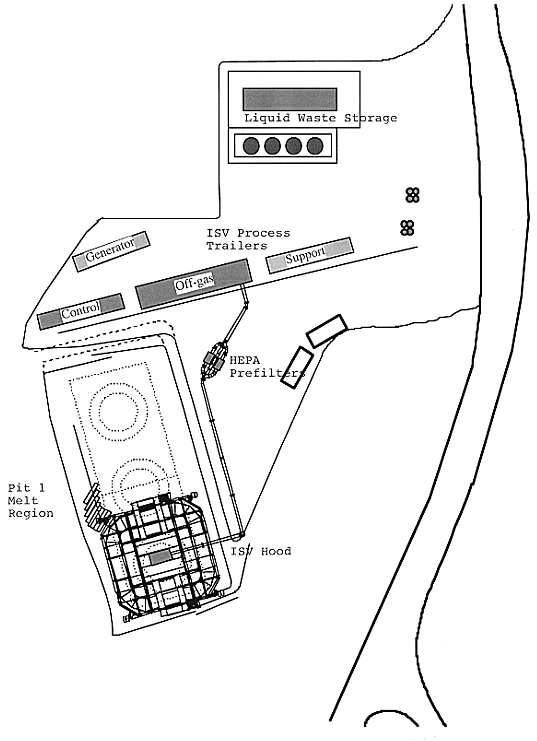
Fig. 1. ORNL Pit 1
ISV site locations.
Craig L. Timmerman
Geosafe Corporation
Brian P. Spalding
ORNL
John S. Tixier
PNNL
ABSTRACT
Large-scale treatability testing of the DOE-developed In Situ Vitrification (ISV) technology was performed at Oak Ridge National Laboratory's (ORNL) Waste Area Group (WAG) 7 Pit 1 site to generate data needed for completion of the RI/FS activity for the 6 remaining pits and trenches located at WAG 7. This paper discusses the unique challenges posed by the site, problems encountered, project results, and significance of test findings relative to future applications of ISV at WAG 7 and similar DOE sites.
The ISV technology has been developed for DOE by the Pacific Northwest National Laboratory (PNNL) since its inception in 1980. Collaboration on technology development and application began with ORNL in 1985. Geosafe Corporation, the commercial licensee of the technology, has also contributed heavily to the development of the technology since 1988 by transitioning it to a commercially viable production technology for a broad range of contaminated soil and waste/debris applications. Over 200 laboratory tests and experiments plus almost 100 large-scale field tests, demonstrations, and commercial melts have demonstrated the broad applicability of the technology for the destruction/removal of organic contaminants and permanent immobilization of inorganic and radionuclide contaminants within a high integrity vitrified product. Geosafe has successfully applied the technology since 1993 on a broad range of contaminated soil and buried waste and debris applications at U.S. Superfund sites and overseas sites.
INTRODUCTION
ORNL's Pit 1 site is an inactive radioactive liquid waste seepage basin that was dug out of a weathered shale ridge and filled with predominantly clay soil. The site was constructed in 1951 to demonstrate a disposal technique for radioactively contaminated liquids. The pit was backfilled in 1981 and capped. The primary objective of the treatability test was immobilization of the Sr-90 contamination within the pit since it becomes mobile in the subsurface environment. A secondary objective was to demonstrate techniques for controlling and managing Cs-137 emissions, since Cs is more volatile than Sr, as a means of minimizing the amount of Cs leaving the treatment zone, thereby minimizing dose rates associated with the off-gas and secondary waste systems. Treatability testing at the Pit 1 site was designed to completely remediate the 20-ft wide by 115-ft long by 15-ft deep pit using three large-scale ISV melts.
The Pit 1 site was unique compared to prior large-scale ISV applications in two ways: 1) this was the first time that ISV was applied at large-scale to Cs and Sr contamination at ORNL, and 2) the pit contained large amounts of free water since the seasonal water table was above the bottom of the pit. Prior pilot-scale ISV testing on simulated Pit 1 conditions indicated that a prefilter would be necessary to remove Cs from the off-gas stream to prevent it from entering, contaminating, and creating dose concerns with the remainder of the off-gas treatment system. It was also recognized that the test design would need to provide some means for removal of the large amount of water present in the pit. It was determined that the anticipated rate of water vapor generation during ISV processing should be able to be removed through the normal pathway through the dry zone adjacent to the melt. In addition, 18 vent pipes were placed in the treatment zone as additional pathways for removal of water vapor to the off-gas collection hood. Water removed and released from these sources was to be collected and treated by the off-gas treatment system.
The first of three planned ISV melts was performed in the center of the pit. Melting was initiated on April 3, 1996. During the first 18 days of melting, many of the prototypical features of the ORNL site-specific off-gas confinement equipment were successfully demonstrated. These included a baghouse-type roughing filter, a HEPA prefilter system, a material addition system, and a remotely-operated, hoist-based electrode feed system. The DOE large-scale ISV process equipment also ran continuously without a major problem, experiencing only a few minor and correctable difficulties. The melt operations appeared to be highly successful.
However, on the afternoon of the 18th day, just as the melt approached the target treatment depth of 16-ft, an unexpected melt expulsion event (MEE) occurred (Oak Ridge National Laboratory 1996), causing damage to the off-gas collection equipment and requiring termination of the melt. Subsequent investigation indicated that a combination of dry zone thickness reduction and subsurface movement of water relative to the melt location resulted in production of water vapor quantities sufficient to force water vapor through the melt rather than the normal pathway through the dry zone surrounding the melt. The flow of vapor through the melt was excessive, causing displacement of some of the melt onto the ground surface under the off-gas collection hood, overheating of the hood structure, and temporary loss of off-gas containment. No personnel injury occurred, nor was there any irretrievable loss of contaminants.
Evaluation of the melt, vitrified product, and conditions existing during the MEE produced several important conclusions. First, analysis showed that retention of Cs-137 within the molten material was estimated to be greater than 99.998%, which was higher than expected, and thereby greatly lessened concerns about potential difficulties of handling Cs-137 as a secondary waste. Second, no Cs-137 was detected downstream of the HEPA prefilter indicating that the prefilter and baghouse roughing filter were successful at capturing substantially all of the Cs-137 present in the off-gas. Third, virtually no smearable contamination was found inside the hood shell, indicating that steps taken to improve gas flow inside the hood and to minimize deposition of Cs on the inside surface were successful. These findings confirmed that ISV could be used to successfully minimize the effects of Cs volatility while treating the soil and contaminants present at the site.
Relative to the MEE, it was determined that the high retention of radionuclides within the melt provided a high degree of safety relative to the risk of environmental contamination from the possible loss of off-gas containment. Spread of contamination was limited to a small amount of vitrified material that flowed from under the off-gas containment hood, but which was easily retrieved. Other than the vitreous material, no airborne contamination was detected at the Pit 1 site or beyond, and no smearable contamination was found outside the confines of the off-gas collection equipment. However, it was determined that further processing of the Pit 1 site, without administrative and engineering modifications, posed unacceptable thermal hazards to operating personnel and the processing equipment.
The benefits offered by the ISV technology for remediation of Pit 1 and similar sites warranted further consideration of modifications to the test design in order to meet the specific conditions present at the ORNL site. Many modifications and adaptations were defined; the most important include the following: 1) intercepting and removing surface and ground water to lower the level of free water in the pit and to prevent further recharge of the pit, 2) fracturing of the shale below and adjacent to the lower region of the treatment volume to ensure existence of a low permeability vapor pathway around the melt to dissipate the water vapor generated during the melting process, 3) installation of vent pipes at various locations within the treatment zone or soil permeability changes so as to provide further pathways for steam venting to the off-gas collection hood, 4) installation of water level and soil gas pressure monitoring instrumentation, 5) installation of "pressure relief" devices in the off-gas collection hood to allow release of steam surges without equipment damage, should they occur, and 6) various administrative and operational changes to ensure personnel safety.
It is believed that these changes will allow the safe and effective treatment of the remainder of the Pit 1 site. Implementation of the changes is underway, and preparations are being made for start of the second test melt. It is expected that the melting portion of the project will be successfully completed during 1997. The paper includes results obtained from the further testing and project status at the time of paper presentation. It also includes the significance of the project findings relative to ISV applications at sites involving largea mounts of free water.
ISV PROCESS
ISV is an innovative on site and in situ treatment process that involves the electric melting of contaminated soil and/or other earthen materials for purposes of permanently destroying, removing, and/or immobilizing hazardous and radioactive contaminants. ISV was invented by Pacific Northwest National Laboratory in 1980 for the U.S. Department of Energy. More than 300 developmental tests and demonstrations, including actual remediations, using the ISV technology have been performed since that time at four scales: bench, engineering, pilot, and large.
The process involves forming a melt at the surface of a treatment zone between four electrodes. The molten soil serves as the heating element of the process, wherein electrical energy is directly converted to heat as it passes between the electrodes. Continued application of energy results in the melt growing deeper and wider until the desired treatment volume has been encompassed. When electrical power is shut off, the molten mass solidifies into a vitrified monolith with unequalled physical, chemical, and weathering properties compared to alternative solidification and stabilization technologies.
ISV melting typically involves molten soil temperatures in the range of 1600-2000°C. This high temperature results in the removal of organics from the treatment volume by vaporization followed by pyrolyzation within the dry zone soil adjacent to the melt. No organics remain in the melt or the vitrified monolith due to the inability of organics to exist at the temperatures involved. A broad range of organic contaminant types have been successfully treated in various ISV tests and demonstrations, including volatiles (e.g., benzene), semi-volatiles (e.g., pesticides), and nonvolatile organics (e.g., PCBs, dioxin).
The predominant disposition of heavy metal oxides during ISV processing involves physical and chemical incorporation into the vitrified product, resulting in their permanent immobilization. Most species of metals remain as oxides in the melt and are incorporated into the vitrified product upon cooling. However, since reduced ferrous metals do not have a strong affinity for oxygen in an ISV melt, they will remain in a reduced state. Therefore, ferrous metals (e.g., scrap metals, piping, drums) present in the treatment zone typically melt and sink to the bottom of the melt pool where they are encapsulated by the vitrified product. It should be noted that ISV treats both organic and heavy metal (including radioactive) contaminants simultaneously, which is a capability largely limited to vitrification processes.
ISV is also distinguished by its ability to tolerate debris within the treatment zone. Organic debris materials behave as other organics during ISV processing that is they are destroyed primarily by pyrolysis. Inorganic debris materials are typically incorporated into the melt and the resulting vitrified product. Types of debris previously processed by ISV include: vegetation, wood, plastic, rubber, cardboard, paper, protective clothing, HEPA filters, activated carbon filters, drums, concrete, asphalt, tires, scrap metal, and general construction demolition debris.
ISV results in a 25-50% volume reduction for most soils, and even greater volume reduction for sludges and wastes that dewater and/or decompose during processing. The volume reduction results in creation of a subsidence volume above the vitrified monolith. In most applications the subsidence volume is backfilled with clean soil and the monolith is left in the ground since contaminants have been destroyed, removed, and/or immobilized. Hazardous material contaminated sites treated by ISV should be capable of future use without restriction associated with the vitrified monolith; radioactive sites typically require some form of long-term institutional control related to the immobilized radioactivity.
The ISV process off-gas treatment equipment used for this ORNL treatability testing included a stainless steel off-gas containment hood that spanned the area being treated; a blowback type baghouse roughing filter at the off gas exit from the hood; an in-line HEPA prefilter; a quencher; a two-stage high efficiency wet scrubber that removes particulates and neutralizes acidic gases; and high efficiency air filtration. The configuration of an ISV off-gas treatment system and site layout (see Fig. 1) can be modified to address site specific requirements and concerns.
Fig. 1. ORNL Pit 1
ISV site locations.
SITE DESCRIPTION
ORNL Pit 1 was constructed in August 1951 by digging a 20 ft by 115 ft trench into the weathered shale to a maximum depth of 15 ft. In the following three months, Pit 1 was estimated to have received about 389 Ci of mixed fission products, 200 kg of depleted uranium, and 266 mg of plutonium, as a sludge suspended in a highly alkaline liquid waste stream of approximately 123,000 gal. This pit was a proof of principle operation for future similar pits and trenches used for liquid storage and seepage trenches at ORNL.
The radionuclide content of the disposed liquids was absorbed by the surrounding soil. The water component of the waste liquids evaporated and/or seeped away from the trench. In 1981, Pit 1 was filled with soil and capped with an asphaltic concrete. Site characterization efforts found that the maximally contaminated strata, which was the target of the ISV processing, resided between 24 and 26 ft below the asphalt cap placed over Pit 1. This was greater than the proven depth capabilities of ISV; thus by removing uncontaminated surface soil and using an excavated startup trench, the actual melt depth required for ISV processing was adjusted to 14 to 16 ft. The adjusted depth of the Pit 1 site allowed for the planned ISV processing of the pit in three ISV melt batch placements or settings.
ISV OPERATIONS AND MELT EXPULSION EVENT
ISV melt operations were initiated at Pit 1 on April 3, 1996. The first melt operation was divided into two phases: 1) an Operational Acceptance Test (OAT) phase and 2) Melt 1 phase. The OAT was planned to operate until the melt reached a depth of no less than 2 ft above the known radioactive contamination layer, which was at a melting depth of 13 ft (24 ft from the original Pit 1 grade). The purpose of the OAT was to observe equipment and operator performance and to make any adjustments as required or necessary before melting into the radioactively contaminated region. The OAT assessment showed that there were no major issues to be addressed or resolved at the time that the OAT evaluation portion of the operation had begun on April 15, 1996. Several minor issues related to equipment performance; including transformer power control, scrubber pump repair, sampling equipment adjustments, roughing filter adjustments, electrode feeder hoist repair, hood view port cleaning, thermocouple failure, and vent pipe monitoring; were discovered and mostly corrected and addressed during the OAT.
During the several day "hold time" between the completion of the OAT and the start of Melt 1, several planned procedures were conducted. Several of the roughing filter bags were removed for sampling and replaced with clean bags. A steel rod was inserted into the melt to obtain a glass sample. Smear samples of the inside of the off-gas hood and piping were also taken. All remaining equipment repairs were also made at this time.
During the "hold time" period of the OAT evaluation, power was applied to the melt at a 1 MW "idling" rate, except when observation and sampling activities were conducted in the vicinity of the hood. The low power levels allowed the melt temperature to be maintained without significantly advancing the melt front. Once the evaluation was completed and the approval was given to continue melting into the radioactive contaminated soils, Melt 1 was initiated on April 17, 1996, 14 days after initiation of the melt. All operations and activities continued without additional problems until the melt expulsion event (MEE) occurred. Radiation dose levels in the vicinity of the hood increased slightly, as expected, as the melt progressed into the radioactive soils.
On April 21, 1996, 18 days after starting the melt, a MEE occurred during the field ISV Pit 1 operations (Oak Ridge National Laboratory 1996). At the time of the event, approximately 2 MW of electrical power was being supplied to the melt. An estimated 216 tons (196 MT) of vitrified soil,containing 2.43 Ci of radioactivity (primarily Cs-137), had been processed. ISV melting operations had been routine at the site for the prior two week period, including planned equipment testing, sampling, and approval interruptions. Specifically, Melt 1 had been in a continuous normal operating mode for about 72 hours immediately prior to the MEE.
An expulsion of steam and a displacement of molten glass occurred as a result of the event. The event caused a pressurization of the overlying off-gas collection hood sufficient to cause a displacement of the hood shell, which allow hot gases to be released, and a small amount of glass to flow out under one corner of the hood. No personnel were injured or contaminated as a result of the MEE. However, shortly after the hot gas and molten glass release, peripheral combustible support equipment (electrical cable insulation, rubber hoses, fiberglass trays, etc.) on and nearby the off-gas hood caught fire due to the intense heat from the molten soil disruption and glass displacement. Fire fighting crews responded to the site for appropriate emergency action, but were advised to simply allow the residual smoldering fires to self extinguish. This occurred in less than one hour after the event as the source of intense heat dissipated quickly.
Samples of air and smoke from the site, including those taken during residual fires, revealed no radioactive airborne contamination. As a further precaution, more extensive and extended site surveys along with site operating personnel whole body assays and urine analyses were performed. None of the assays and surveys showed any detectable levels of contamination to any personnel or site locations beyond the ISV site boundary. This indicated that all of the radioactivity was well contained within the ISV glass.
MECHANISM AND CAUSE OF THE MELT EXPULSION
The melt expulsion was caused by an intrusion of water vapor into the ISV melt which subsequently pressurized the off-gas hood and displaced a portion of the molten soil. The ISV process generates gases (primarily water vapor) through the soil heating process. These gases normally flow around the melt through a gas porous "dry zone" (i.e., permeable zone with no liquid water present, since the zone is >100°C) surrounding the melt. For gases to penetrate into the melt, this dry zone must experience reduced flow (e.g., reduced permeability) and/or be constrained by a confining layer that may be man made (e.g., concrete or steel tank wall) or a natural, more dense, less permeable geologic layer. This intrusion into the ISV melt must exceed the forces that normally hold these gases outside the melt. These forces include the hydrostatic head or pressure exerted by the molten body itself, plus the structural strength of the surrounding sintered or fusion zone (where transition from soil particles to liquid molten soil occurs), plus the structural strength of the existing melt cold cap. To further understand how these various components interact to conduct steam around the melt body rather than through it, the normal ISV melt operations and gas flows need to be reviewed. As seen from Fig. 2, the molten body has several transition zones between it and the thermally affected soil, which are usually within one foot of the actual molten product. The majority of gas flow is believed to occur in a region or layer of "dry zone" surrounding the melt, which is defined as that zone between the 100°C isotherm and the fusion layer. This dry zone acts as a high permeability conduit for steam and other hot or pyrolyzed gases to move from beneath and around the melt to the ground surface where they are collected by the off-gas hood for treatment. As this zone dries out, the total soil porosity of the soil in the dry zone is available for gas transport.
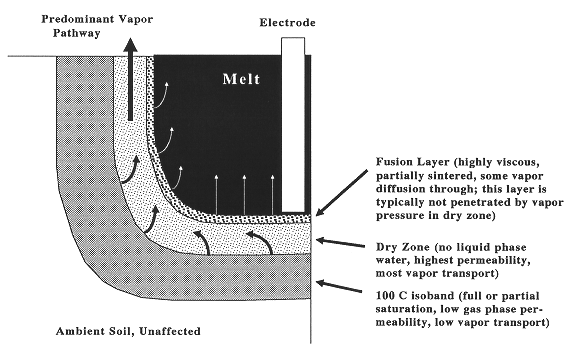
Fig. 2. Conceptual model of
ISVoff-gas vapor pathways around a body of molten soil.
The Pit 1 site had pit backfill soils that averaged 43% porosity with a bulk density of 1.5 g/cc. The pit backfill region is surrounded by undisturbed shale at the bottom and sides of the original pit material that had a porosity of 16% and a bulk density of 2.2 g/cc. The MEE occurred during the period when the ISV melt was contacting the bottom of the pit and progressing into the denser, less porous natural shale media. It is now concluded that this natural geologic formation produced a confining structure that would not allow generated gases to pass or dissipate to the more permeable regions of the dry zone. This confinement of these generated gases resulted in a build-up in pressure beneath the melt. This pressure build-up continued until the pressures exceeded the restraining forces of the melt, fusion zone, and cold cap. At this point, gases breached the fusion zone and entered into the melt. These gases propagated through the melt and ultimately released to the off-gas hood, creating the hood pressurization, and the glass displacement event.
Thus, it is believed that confinement of gases by the natural unweathered shale layer beneath and beside the Pit 1 formation is the primary cause of the MEE and the resultant glass displacement. This result is similar to previous ISV glass displacement events (Geosafe Corporation 1993), which encountered gas flow restrictions produced by man-made subterranean structures, including tanks and drums, and other natural flow restrictions, such as the groundwater table. The Pit 1 excavation into a natural geologic strata of dense unweathered shale would function in the same manner as an impermeable man-made or natural structure. Therefore, any confinement of gases generated by the ISV processing must be avoided to promote their natural escape through the dry zone or they will eventually build pressure enough to penetrate through the next available path of least resistance, which is likely the ISV melt. Such penetration, if it involves excessive amounts of vapor, can cause undesirable results, such as a MEE.
TESTING RESULTS
Overall, the ISV operations for Melt 1 were performed in a routine manner. A number of minor equipment issues, mentioned previously, were corrected as needed as the melt progressed. The average power input to the melt was between 1.5 and 2.0 MW, as shown in Fig. 3. The total energy consumed is also provided in Fig. 3; and 530 MWh of energy was delivered to Melt 1. A total melt depth of 15 ft was achieved from the melt surface starting elevation. A melt depth growth rate of ~1 ft/day was consistent throughout the test exclusive of the 3 day evaluation "hold time" between the OAT and the start of Melt 1.
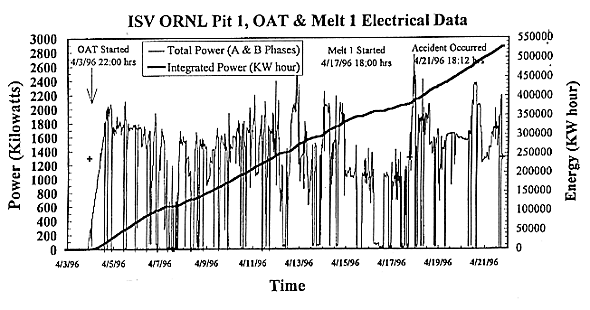
Fig. 3. Electrical power and
cumulative energy applied to the ORNL ISV melt over the duration of operations.
The distribution of radionuclides (Cs-137 chosen as the assay radionuclide) in the ISV melt and associated processing equipment was assessed to determine radionuclide retention efficiency and related process performance. The radionuclide inventory was found to be distributed in: 1) the ISV melt, 2) the off-gas hood roughing filter, 3) the in-line high efficiency particulate air (HEPA) prefilters, 4) the HEPA filters for the hood's backup blower system, 5) the off-gas scrub solution, and 6) the hood panel and piping internal surfaces. Results of the distribution of Cs-137 are presented in Fig. 4. The majority of the Cs-137 (99.998%) was retained in the ISV melt. Of the small fraction (0.002%) of Cs-137 that was released to the process off-gas system, most was retained on the roughing filter. Of the fraction that passed the roughing filter, all was retained on the HEPA prefilters as no Cs-137 was detected in the off-gas scrub system solutions or the final HEPA filters of the process off-gas system. The HEPA filters on the hood's backup blower system also contained a small but measurable amount of the total inventory. Smear samples obtained during field surveys of the various hood panels and off-gas piping revealed no detectable activity. Therefore, virtually all of the radionuclide inventory was retained in the ISV glass with the small fractional release effectively contained in the process off-gas treatment system. These results were considered outstanding and indicate the ability to control Cs-137 emissions during ISV processing.
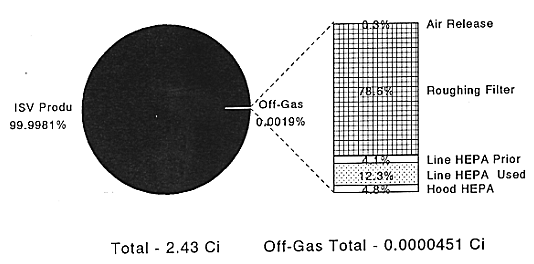
Fig. 4. Distribution of 137Cs
in ISV off-gas and equipment following the incident.
TECHNIQUES TO AVOID FUTURE EVENTS
Several techniques have been identified to prevent a repeat of the ORNL Pit 1/Melt 1 MEE during future ISV operations. Proposed techniques of potential value are identified along with a discussion of their potential effectiveness and feasibility of implementation.
Water Removal
As discussed above, the groundwater surrounding the melt was the source of the water vapor that entered the melt and caused the MEE. The quantity of water in the ORNL soils is very large, thus removal of this source term is essential to prevent any excess water and corresponding gases generated from entering the ISV melt. Therefore, pumping of this free water should be employed to lower the water table and remove a major portion of the water in the pit and the nearby surroundings. Removal of the free water will not only remove the primary source of water vapor; it will also result in higher gas phase permeability through the soil, as this removed water also increases the available porosity of the soil to allow easier movement of the gases around the melt.
Initially, drawdown wells will be installed around and near, but outside Pit 1. This placement will likely attenuate any radioactive contamination removal from Pit 1 yet still allow the removal of the groundwater. Groundwater will be drawn into the wells from Pit 1 and surrounding soil as induced by the drawdown hydraulic gradient. Attainment of appropriate water drawdown in a reasonable time frame will depend on the hydraulic conductivity and connectivity of the wells to the groundwater formation and thus the placement of the wells. This information can be readily determined by drawdown and recharge tests using the new wells placed at the site. It is projected that a minimum of two productive wells to a depth of 35 ft below existing grade will be required to draw down the groundwater. If the wells outside the Pit 1 boundary are not productive enough to meet the groundwater drawdown requirements within the pit, additional wells with ion exchange filters will need to be placed directly in the more permeable region of the Pit 1 backfill material to achieve the drawdown requirements. It is believed that removal of the free water in the pit will greatly reduce the risk of a MEE; however, additional techniques for increasing the safe ISV treatment of the ORNL pits are discussed below.
Gas Release
It has been shown that the ISV process can be safely operated in highly saturated soil conditions given that there is an adequate release pathway available for removal of the water vapor around the melt to the surface. Removal of much of the free water from the pit (described above) will limit the possible rate of water vapor generation. In addition to limiting the generation rate, it is important that the melt growth does not seal off the vapor pathway by sealing into the adjacent impermeable shale.
Two methods are proposed to enhance the escape or release of gases (primarily water vapor) generated around the melt zone. One method that was used on the first melt operation was employment of straight and angled vent pipes placed at various depths and positions around the projected melt shape, which allowed passive venting into the off-gas hood for containment purposes. The effectiveness of these vents during the Melt 1 operations was difficult to assess and therefore not known. Further examination of these vents and their effectiveness will be made when the hood is repositioned and access to the vents is possible. As an improvement to the use of the vent pipes, curved vent pipes will be installed at or beneath the final melt depth along with an improved gas flow sensing capability.
The other method for improving the flow or release of gases from beneath and around the ISV melt will involve increasing the effective permeability and porosity of the unweathered shale formation surrounding the lower regions of the pit. The change will be implemented by the use of standard soil fracturing, injection, or vibratory penetration techniques. These methods will change the effective permeability of the geologic strata surrounding Pit 1 to ensure that a more porous dry zone exists around the melt, which will allow the gases to dissipate prior to reaching a pressure that forces penetration into the ISV melt. The effectiveness of this permeability modification will be monitored by hydraulic conductivity measurements that will be made before and after of the testing of the drawdown wells discussed above.
Operational Guidance and Monitoring
In addition to improved gas release or venting provisions, added monitoring and operational precautions will be implemented to further control or prevent another MEE. Groundwater level monitoring will be employed again to assess water level effects and concerns. Gas pressure sensing will be positioned and monitored beneath the melt to provide an early warning to ISV operators that pressures under the melt are building, indicating that melting operations should be slowed or stopped. Reduction in power to the melt is an operational strategy that may be implemented to slow the melt progression, which in turn slows the gas generation rate and allows gas dissipation to occur, thus preventing excessive pressure buildup and corresponding melt intrusion.
In addition to power reduction, the electrodes can be held above the region where the melt bottom approaches the underlying dense, "fractured", unweathered shale formation for melt shape control purposes. These "power reduction and melt shape control" techniques have been effectively used at other ISV sites to prevent similar melt expulsions. Such techniques are designed to slow the steam generation rate and control melt progress near such transitions zones. These operational and monitoring techniques in conjunction with other methods to avoid a MEE have excellent potential to prevent or certainly minimize the reoccurrence of the problem.
PROJECT STATUS AND DIRECTION
The project at ORNL is currently going through a management reorganization and a project restructuring. It is desired to continue the Pit 1 project to confirm the safe and effective applicability of ORNL pit remediations by ISV. This project is scheduled to continue with ISV operations restarting at Pit 1 for Melt 2 and 3 in early 1997. It is anticipated that ORNL will manage the continuation of the project and that Geosafe Corporation will assume responsibility for the actual melt planning and operations. The project will implement the above identified actions to allow safe and effective processing of the Pit 1 site through the use of ISV for the two additional melts. Once safely implemented, the ISV technology will be considered for remediation of the other pits and trenches in the WAG 7 region of the ORNL site.
ACKNOWLEDGEMENTS
Past funding for the development of ISV was provided by the Department of Energy (DOE) Office of Technology Development. Funding for the Pit 1 Treatability Test Study has been provided by the Office of Environmental Restoration. The Oak Ridge National Laboratory (ORNL) is managed by Lockheed Martin Environmental Services for DOE. The Pacific Northwest National Laboratory is operated by Battelle Memorial Institute for DOE.
BIBLIOGRAPHY
Geosafe Corporation 1993. Summary Report. Investigation into the Causes and Application Significance of the Melt Displacement Event Occurring During Geosafe Operational Acceptance Test #2 (OAT-2). GSC 2301. Geosafe Corporation, Richland, Washington. May 14, 1993.
Oak Ridge National Laboratory 1996. Technical Evaluation Summary of the In Situ Vitrification Melt Expulsion at the Oak Ridge National Laboratory on April 21, 1996, Oak Ridge Tennessee. ORNL/ER-374/R1. Oak Ridge National Laboratory, Oak Ridge, Tennessee. November 1996.