Table I Treated Waste (NPDS)
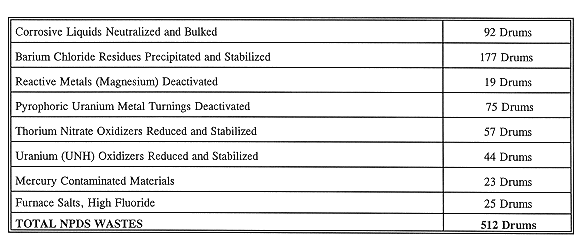
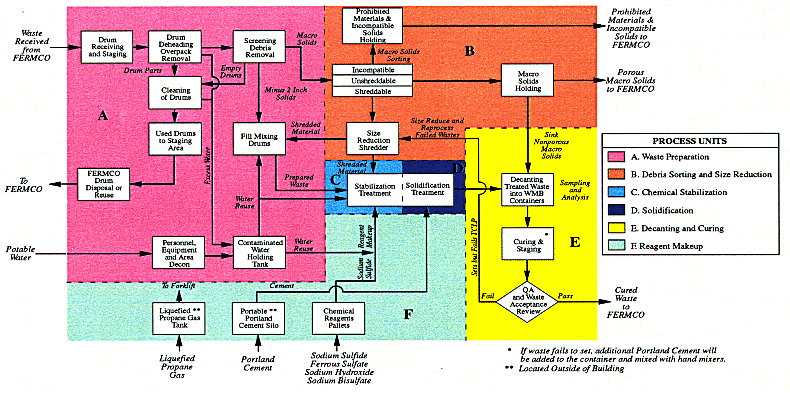
Fig. 1. Block flow diagram - mixed
waste stabilization process.
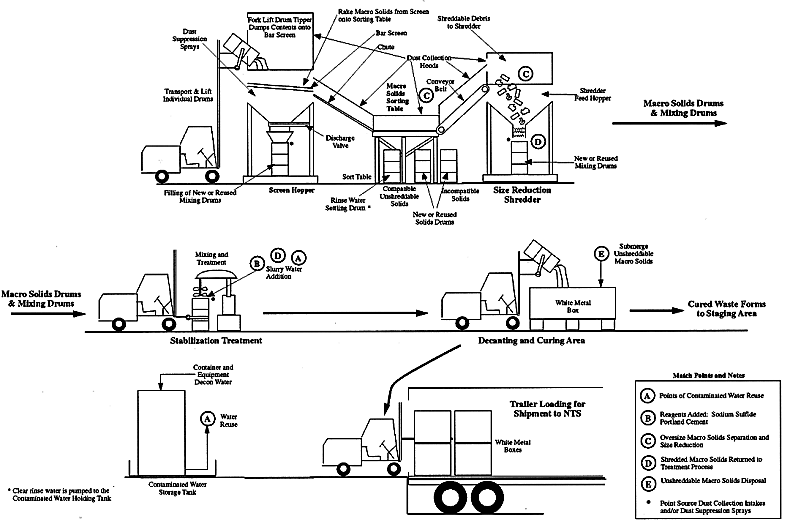
Fig. 2. Schematic diagram of
treatment process.
Timothy L. Kimball and Louis Centofanti
Perma-Fix
Environmental Services, Inc.
Ron W. Anderson and Ben R. Crocker
Performance
Development Corporation
ABSTRACT
In work at the U.S. Department of Energy's (DOE) Fernald, Ohio, site, Perma-Fix Environmental Services, Inc. (Perma-Fix), and Performance Development Corporation (PDC) have successfully treated over 17,000 cubic feet of the Fernald Environmental Management Project (FEMP) legacy mixed waste to comply with RCRA, HSWA, CERCLA, and SARA. Most of this waste has already been disposed of at Nevada Test Site (NTS) and Envirocare of Utah. In addition, Perma-Fix and PDC have teamed with Fluor Daniel and Terra-Kleen Response Group, Inc., to test Terra-Kleen's organic extraction process to treat PCB-contaminated mixed wastes at the FEMP.
The mixed waste at FEMP, which is operated by the Fluor Daniel Fernald (FDF),was generated during uranium and thorium processing operations and remedial actions at the DOE facility. This waste was classified as both low-level radioactive and hazardous, which required treatment to eliminate the hazard, prior to disposal as low-level radioactive waste (LLRW). The Mobile Mixed Waste Stabilization and Chemical Treatment Projects used the Perma-Fix Process to chemically stabilize and solidify characteristically hazardous mixed waste. Chemical hazards of the project waste were soluble RCRA metals including arsenic, barium, cadmium, chromium, lead, mercury, selenium, and silver (U.S. Environmental Protection Agency [EPA] waste codes D004-D011). Other waste characteristics successfully eliminated were ignitability (D001), corrosivity (D002), and reactivity (D003).
Following processing by the Perma-Fix/PDC team, successful treatment of the waste was verified by an approved laboratory using the toxicity characteristics leaching procedure. The treated waste no longer exhibited hazardous characteristics and was shipped in metal boxes as solid monoliths for disposal as low-level radioactive waste.
The Perma-Fix Process for treatment of mixed waste is a two-step procedure to stabilize and solidify waste materials. This process renders toxic heavy metals and radionuclides insoluble by precipitation (removing the hazardous characteristic) and then locks them in a solid matrix. The final waste form is carefully designed to meet the waste acceptance criteria (WAC) of the intended disposal facility.
The 2,800 drums of treated waste included grit blast residues, solidified furnace salts, sump cakes, construction rubble, uranium oxide, barium residues, corrosive liquids, reactive solids, uranium metal turnings, low concentration mercury contaminated soils, and oxidizers (thorium nitrate and uranyl nitrate hexahydrate).
The treatment projects were completed on schedule and under budget. The success of the Perma-Fix Process at Fernald is now highlighted in the FEMP site Lessons Learned Program.
MIXED WASTE STABILIZATION AND CHEMICAL TREATMENT PROJECTS
Both waste treatment projects were accomplished using mobile stabilization equipment that was designed, fabricated, assembled, tested, developed, and operated by members of the team. Each project consisted of two phases. Phase I included the development of plans and procedures, and Phase II included the operational phase. Perma-Fix/PDC achievements to date include the following:
Treatment:
- The first 1,550 drums were treated and solidified three weeks ahead of schedule.
- Another 800 drums were treated and solidified by the deadline of September 30, 1996.
- All wastes treated under this project have been accepted for disposal at NTS.
- Perma-Fix/PDC met or exceeded every project milestone.
- The work plan was approved by Ohio EPA within 45 days.
- The team mobilized, set up, and passed the readiness assessment within 60 days.
Administrative:
- A draft work plan, quality assurance plan, health and safety plan, sampling plan, and process control plan were prepared within 30 days of contract award.
- Project procedures considered existing site operations and procedures.
- The team prepared the project for an operational readiness assessment and responded to observations and findings in record time.
- The team set up project quality assurance and health and safety programs and maintained monitoring and overview in these areas.
- Maintenance of waste data collection and sampling included dual storage of project records.
Mixed Waste Stabilization Project
A treatability study was conducted by Nuclear Fuel Services, Inc. (NFS), on representative composite samples from each of the five waste categories. Scoping tests were performed to provide "Proof in Principle" that cement stabilization would produce low-level radioactive waste forms capable of meeting RCRA land disposal restrictions (LDR) treatment standards and the NTS WAC. These tests involved testing each of the five representative composite samples to evaluate the initial waste loadings, type of stabilization reagents, and dosage ranges that would produce an acceptable treated waste form. The following process description includes information regarding the grouping of mixed waste for stabilization treatment, the development and application of treatment recipes, and the sequence of operations in the production of stabilized waste forms acceptable to NTS.
Production Process Description
This section describes the sequence of operations that comprised the production process. Figure 1 is a block flow diagram of the mixed waste stabilization process. Figure 2 is a schematic diagram illustrating the treatment process. The individual process units, which made up the waste treatment production process, are enclosed by dashed lines in Fig. 1 and as designated as follows:
| Process Unit A - Waste Preparation | Process Unit D - Solidification |
| Process Unit B - Macro Solids Sorting and Size Reduction | Process Unit E - Decanting and Curing |
| Process Unit C - Chemical Stabilization | Process Unit F - Reagent Makeup |
Chemical Treatment (NPDS) Project
The key to the success of the Neutralization/Precipitation/Deactivation/Stabilization (NPDS) chemical treatment project was effective matching of treatment recipes to the waste categories for which they were designed and response to waste variability within each category. Treatment recipes were designed for each waste category or major subcategory, as appropriate, based upon bench-scale testing. Table I identifies the waste treated in this project.
Table I Treated Waste (NPDS)
Fig. 1. Block flow diagram - mixed
waste stabilization process.
Fig. 2. Schematic diagram of
treatment process.
A treatability study was performed by NFS, on samples from three of the four waste categories, and documented in a final report entitled, Treatability Study Report for the FERMCO Chemical Treatment Project, NFS-SP-WST-006, Rev. 0, April 23, 1996. A treatability study was not performed on the oxidizer waste category because treatability and actual process information was available for similar waste streams that had been successfully treated on-site. The study concluded that each waste category could be treated as proposed.
Neutralization Treatment Technology Application
Neutralization treatment was performed in a mobile cone-bottom neutralization vessel to transform corrosive liquids into a non-corrosive form by reaction with acid or base, as appropriate. There were two main types of corrosives, inorganic (aqueous) and organic. The process flow diagram for neutralization in Fig. 3 shows that inorganic and organic corrosive liquids were bulked in the neutralization vessel and treated by elementary neutralization to eliminate the hazard characteristic of corrosivity.
Neutralization treatment for this project involved bulking of corrosive liquids followed by additions of acid or base, as appropriate, and mixing to adjust the pH of the waste into the range of 5.0 to 9.0 standard units. For waste having a pH less than 5.0, sodium hydroxide was added. Based on waste characterization data, it appeared that most of the corrosive wastes were acidic. Caustic wastes and acidic wastes were blended in the neutralization vessel to partially neutralize the acids. More sodium hydroxide was added as necessary to neutralize the remaining acid and adjust the pH. If any wastes having a pH over 9.0 remained after blending with the acidic wastes, these wastes were neutralized by additions of sodium bisulfate, either in dry form or diluted to make a standard sulfuric acid solution. When the corrosive liquids were neutralized, they were repackaged and returned to on-site RCRA inventory for storage.
Precipitation/Stabilization Treatment Technology Application
Precipitation/stabilization treatment, in this project, involved reaction of the soluble metallic cations in the waste matrix with a precipitation reagent followed by stabilization to produce a solid monolith. The products of these reactions were metal precipitates having very low solubility in water, and therefore very low potential for leaching. Barium chloride residues comprised the largest primary waste stream suitable for precipitation treatment. The waste codes indicated that barium and lead were the main contaminants of concern.
The physical characteristics of the barium chloride residues were expected to vary from contaminated soils and relatively soft salt cake to hard salt. As shown in Fig. 3, the treatment scheme for these wastes included screening and sorting of the waste to remove any prohibited items, size reduction in a knife shredder, slurrying with water, measurement and adjustment of pH, precipitation of barium, upward pH adjustment, precipitation of lead, solidification treatment with portland cement, and decanting of the treated waste into WMBs. Because the barium content of these wastes was high, a commensurately high dosage of precipitation reagent was used. Also, an appropriate soaking period was utilized to ensure adequate time for the reaction. Before stabilization, reagents were added to the precipitated waste, representative samples of the pretreated waste were subjected to field extraction and analyzed for barium in the field. If leachable barium was still in excess of treatment targets, the mixing drums of waste were returned to the mixer, treated with more reagent, and allowed to soak again. When an acceptable test result was obtained, the next step of treatment proceeded. Precipitation treatment technology was also used to treat heavy metal constituents in the oxidizer waste category.
If significant concentrations of other RCRA metals such as lead were present, other selected reagents were added to the waste to form metal precipitates. A test of the precipitated waste was performed to ensure that a slight residual of unreacted precipitation reagent was present after the reaction was complete. When a satisfactory result for the test was obtained, stabilization treatment was performed. After toxic metals had precipitated, the waste was stabilized with portland cement to produce a solid monolith for disposal.
Deactivation Treatment Technology for Reactive and Ignitable Metals
Deactivation treatment for this project consisted of mixing the waste with an appropriate inerting reagent to produce a non-reactive treated waste form. Wastes classified as reactives for this project were primarily magnesium metal (D001) in several different physical forms. Ignition was the main safety concern that was addressed in processing these reactives.
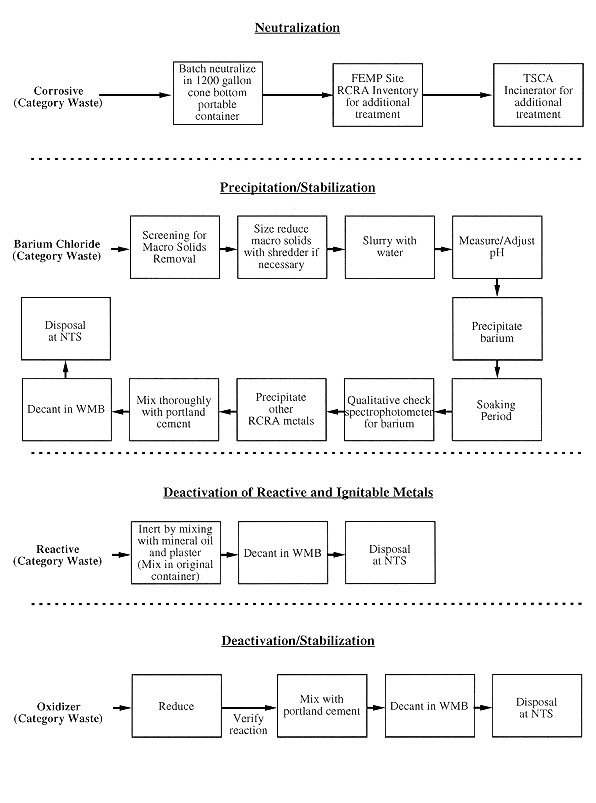
Fig. 3. Process flow diagrams -
Fernald mixed waste chemical treatment project.
As shown in Fig. 3, the treatment scheme for reactive metal wastes included in-drum slurrying in mineral oil to minimize ignition potential, followed by inerting and solidification treatment with plaster (gypsum), as an inerting material. The mixing necessary to slurry the waste in mineral oil and disperse the solidification reagent was provided with Perma-Fix's in-drum propeller mixer. This treatment scheme was a technical match with the methodology used by NFS in their treatability study.
As shown in Fig. 3, the deactivation technology also was an application in the treatment of waste in the oxidizer category. The oxidation/reduction reaction between the reagent and the waste was a deactivation step. The application of deactivation and stabilization technology to the oxidizer category is discussed in the next section.
Deactivation/Stabilization Treatment Technology Application
Wastes in the oxidizer category are hazardous because of their tendency to react with other chemicals in a sometimes violent oxidation/reduction reaction. Deactivation treatment takes advantage of this tendency by adding reducing agents in a safe and controlled manner to bring the oxidation/reduction reaction to completion before the waste is offered for disposal. Most of the wastes to be treated by deactivation were nitrate salts of various metals (sodium, potassium, uranium, and thorium). In addition, thorium was present in its oxide and fluoride forms. RCRA metals of concern included barium, chromium, lead, and mercury.
As shown in Fig. 3, the treatment scheme for the nitrate, oxide, and fluoride based wastes included slurrying with pH-adjusted water, followed by an in-drum reduction step. Reduction of hexavalent chromium and precipitation of barium were very important factors in treatment success. Also, ensuring adequate reaction time, and testing for reaction completion were important activities leading to treatment success.
In addition to the reduction of oxidizers, leachable RCRA metals required precipitation in order to meet the LDR under the Universal Treatment Standard. If necessary, each mixing drum of reduced waste was removed from the mixer and placed in a soaking area for 8 to 16 hours to allow reactions to reach completion. For wastes that contained other TC metals such as arsenic, lead, and silver, a second precipitation step was performed with a reagent to precipitate these metals. A qualitative test was performed to identify the reaction end point.
Stabilization technology was applied to the waste after precipitation had been achieved. The goal of the stabilization treatment was to produce a solid monolith that had no free liquid. For dry or water-based wastes, the stabilization reagent was portland cement. The amount of portland cement prescribed was added, thoroughly mixed with the waste, and evaluated for slump.
Due to the health and radiological hazards associated with the various forms of thorium to be treated with this technology, all major process equipment used to handle thorium-containing wastes was enclosed in temporary enclosures that by means of isolating materials and negative pressure ventilation prevented release of airborne particulates into the Plant 6 work space. These enclosures were connected to the negative pressure ventilation system that discharged outside the Plant 6 Building by way of the HEAP filtration system.
Organic Extraction Project
Based on their performance with the Mixed Waste Stabilization and Chemical Treatment Projects, Perma-Fix/PDC has been contracted to assist in a composite team comprising Fluor Daniel and Terra-Kleen Response Group, Inc., to treat mixed waste contaminated with PCBs, RCRA metals, and RCRA organics. In this teaming arrangement, Perma-Fix/PDC will prepare the wastes and load them into extraction vessels. Terra-Kleen will perform vapor and solvent extraction to remove the PCBs and organics, and Perma-Fix/PDC will precipitate and stabilize the metals to meet LDR treatment standards and the WAC of Envirocare of Utah.
The Terra-Kleen process reduces the concentrations of PCBs and RCRA organics to levels below regulatory requirements established under TSCA and the RCRA LDR treatment standards. The Perma-Fix Process then precipitates the RCRA metals and stabilizes the material such that final waste forms shipped to Envirocare of Utah, meet the LDR treatment standards, and the Envirocare WAC for metals. Effluents and residuals of the Terra-Kleen process will meet the WAC for the TSCA Incinerator at the Oak Ridge, Tennessee, K-25 Site, or the FEMP Advanced Wastewater Treatment Facility. Generation of secondary wastes such as contaminated equipment, used anti-contamination clothing, respirators and empty containers shall be minimized by a combination of techniques, including generation avoidance, contamination prevention, and decontamination, recertification, and reuse.
Terra-Kleen has demonstrated their process during a treatability study conducted at Terra-Kleen's testing facility in Okmulgee, Oklahoma; during a pilot-scale demonstration at Naval Air Station North Island in San Diego, California; and during full-scale operations at Naval Communication Station, Stockton, California. Perma-Fix/PDC has demonstrated its process during ongoing mixed waste chemical treatment projects at the FEMP site.
The Organic Extraction Project will be conducted in three phases.
| Phase I | Project planning activities and approvals by FEMP, DOE, U.S. EPA, and the Ohio EPA (already complete). |
| Phase II | a. Mobilization of personnel and equipment
installation, testing, and readiness evaluation of treatment processes.
b. A trial run of the Terra-Kleen process on six cubic yards (40 drum equivalents) of PCB and volatile organic compound (VOC)-contaminated mixed waste materials. |
| Phase III | Production treatment of 60 cubic yards (414 drum equivalents) of PCB-contaminated mixed waste and 210 cubic yards (1,306 drum equivalents) of debris and fines/soils/sludges contaminated with organic constituents. |
During Phases II and III, the Perma-Fix/PDC team will also be responsible for quality assurance, health, and safety oversight for their portion of the treatment process. Phase II was scheduled to begin in late January 1997, with Phase III beginning in late April 1997.
Project Objectives
The objective of the Organic Extraction Project is to safely treat approximately 1,160 containers of mixed waste categorized as polychlorinated biphenyl (PCB)-contaminated materials and organic contaminated debris, fines, soils, and sludges. Most of the containers are 55-gallon drums, but some smaller (30-gallon drums) and some larger (4' (breve) 4' (breve) 7' boxes) containers are included in the waste inventory planned for the project. The wastes will be organized into separate treatment campaigns for each major waste category. Within each major waste category are one or more MEFs. Within a treatment campaign, MEFs are kept separate unless two or more MEFs have been evaluated and found to be compatible. Table II lists the estimated volume and number of containers in each of the waste treatment campaigns envisioned for the project.
Table II Summary of Waste Treatment Campaigns
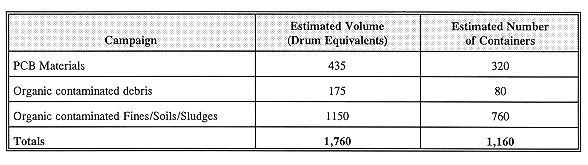
This project will be performed at two specific locations at FEMP by the composite project team. This composite team was brought together for the project because each member organization provides technical knowledge, waste management/ treatment capability, and experience critical to the successful attainment of project goals. One of these goals is to perform a full-scale demonstration of Terra-Kleen's Organic Extraction Process on representative DOE waste streams contaminated with PCBs and RCRA organic compounds, as part of the U.S. EPA Rapid Commercialization Initiative. Another equally important goal of the project is to treat the project wastes to meet LDR and the WAC of Envirocare's mixed waste disposal facility at Clive, Utah.
Waste Processing
Waste materials will be processed in three serial steps as follows: 1) waste preparation, 2) removal of PCB and organic compounds by vapor and solvent extraction and 3) precipitation/stabilization of toxic metal contaminants remaining in the extraction-treated waste.
Step 1 - Waste Preparation
In the first process step, contaminated project waste materials presently stored on the FEMP site will be brought to the Plant 6 Building where Perma-Fix/PDC will prepare the waste for subsequent PCB and organic extraction by Terra-Kleen. Waste preparation will include opening the waste containers, removing and bulking any decantable liquids, screening out macro solids, sorting out prohibited items, size-reducing the acceptable oversize solids, and loading the prepared waste into the Terra-Kleen extraction vessels.
Step 2 - Organic Extraction
In the second process step, the prepared extraction vessels will be transported to Building 80, where Terra-Kleen will perform the extraction of RCRA organics and PCBs using vapor extraction and solvent extraction processes. Vapor extraction will be used initially to extract VOCs, semi-volatiles, and excess moisture. Vapor extraction consists of recirculating hot air through the extraction vessels that are prepared by Perma-Fix/PDC and condensing the organics and water vapor from the return air stream for subsequent disposition as a liquid mixed waste. Vapor extraction of the waste will continue until organics have been reduced to below LDR requirements and moisture content is below 15 percent. Recovered liquids will be bulked and transferred to the FEMP Liquid Mixed Waste Bulking Project for ultimate disposal. Following vapor extraction, solvent extraction using Terra-Kleen's proprietary solvent will be performed at ambient temperature. Solvent extraction will remove PCB contaminants and residual RCRA organic constituents to levels below their corresponding TSCA and RCRA LDR levels. Contaminant-laden solvent will be subjected to filtration and distillation to regenerate a clean solvent for reuse and to produce a concentrated liquid waste stream for subsequent disposal through the FEMP Mixed Waste Liquid Bulking Project. Reclaimed solvent will be continuously recirculated through the waste until the required cleanup level has been achieved. The final operation of the solvent extraction process will be a water rinse to remove residual solvent from the treated solids. Terra-Kleen personnel will verify, through sampling and analysis, that the extracted waste meets applicable RCRA organic and PCB concentration limits before it proceeds to Step 3.
Step 3 - Metals Precipitation/Stabilization
In the third process step, extraction vessels that have completed the organic extraction step will be brought back to Plant 6 where Perma-Fix/PDC will review the waste characterization data for the original waste and determine whether RCRA metals are present in concentrations above the LDR treatment standard. If RCRA metals are below the treatment standard, the waste will be removed from the extraction vessel, drained of residual rinse water, and repackaged into WMBs for shipment to Envirocare. If necessary, a non-hazardous water-absorbent media will be added to the waste to absorb free water. If RCRA metals are above the LDR treatment standard, the waste will be removed from the extraction vessel, repackaged into 55-gallon mixing drums and subjected to precipitation/stabilization treatment. After the metals treatment has been completed, the mixing drums will be emptied into a plastic-lined WMB and the stabilized waste cured into a low-strength waste/grout monolith inside the box. Recovered liquids will be bulked for management and disposal through the FEMP Mixed Waste Liquid Bulking Project.
All movement of waste containers, extraction vessels, and necessary supplies and equipment between buildings at FEMP will be performed by Fluor Daniel personnel using established site procedures. Also, Fluor Daniel personnel will perform all waste container handling that takes place inside Plant 6 or Building 80, except for those activities that occur internal to the Perma-Fix or Terra-Kleen processes.