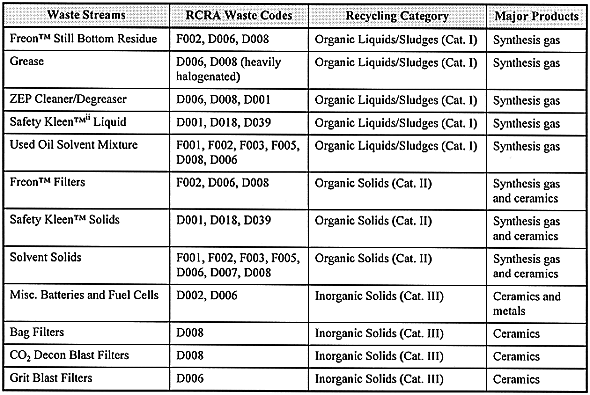
Table I Duke Power Waste Streams and Categories
Larry Evans
Duke Power Company
Tina Richards, Eli Eilbott and Cheryl Baker
M4
Environmental L.P.
Esther Wong and Ron Sills
Molten Metal Technology, Inc.
400-2 Totten Pond Rd.
Waltham, MA 02154
ABSTRACT
Mixed wastes have posed significant problems for utilities. Processing/disposal options have been limited by physical form, chemical composition and radionuclides. Lack of processing/disposal capacity for more difficult mixed wastes (MW) such as Freon™ filters, sludges, greases, paint sludges and solids, and batteries have required some utilities to store their MW while waiting for commercial processing capacity to come on-line. Duke Power recently initiated an Electric Power Research Institute (EPRI) Tailored Collaboration (TC) with M4 Environmental L.P. (a joint venture between Lockheed Martin Corporation and Molten Metal Technology) to process their stored MW and demonstrate a commercial recycling alternative for MW.
The Duke MW will be processed at M4's Technology Center in Oak Ridge, Tennessee. This 100,000 ft2 facility houses four Q-CEP® units. Quantum-CEP® is a proprietary recycling technology developed by Molten Metal Technology, Inc. The technology utilizes a metal bath that acts as a catalyst and solvation medium, dissociating and dissolving hazardous and radioactive compounds into their elemental constituents. This ensures complete destruction of the hazardous components, demonstrated by destruction removal efficiencies (DREs) > 99.9999%. By careful selection of co-feeds including other wastes such as waste oil, the elements can be recombined to form commercial products such as synthesis gas, and ceramics and metal alloys with condensed radionuclides.
The Duke Power MW slate was broken down into three categories with chemically and physically similar forms to support operational and regulatory strategies. The categories were organic liquids and sludges, organic solids, and inorganic solids. Treatability studies were designed to the following objectives: demonstration of targeted product formation, partitioning of Resource Conservation and Recovery Act (RCRA) metals and radionuclides, and DREs in support of broad recycling applications for each waste category.
M4 has completed the treatability study on Duke Power's mixed waste organic liquids and sludges (MWOLS) and is currently performing treatability studies on Duke's organic solids and inorganic solids. The Tennessee Department of Environment and Conservation (TDEC) issued a use/reuse recycling determination on December 24, 1996, for the broad category of MWOLS based on the treatability study results from Duke's MWOLS and previous data from processing various organic liquids at Molten Metal Technology's Recycling Research and Development (R&D) Facility in Fall River, Massachusetts. Having received the use/reuse recycling designation, M4 will receive and process the remainder of Duke's MWOLS in 1997 without being subject to RCRA permitting requirements. M4 also expects to obtain a recycling determination for organic and inorganic solids in 1997. This paper focuses on the objectives for the treatability studies and the results of the studies to date.
BACKGROUND
M4 Environmental L.P. and its parent company, Molten Metal Technology, Inc. (MMT) have teamed utilizing their proprietary Quantum-CEP® technology to provide an environmentally advantageous solution for commercial and government MW. MMT and M4 have worked together with Duke Power Company and EPRI to demonstrate the successful processing of a wide range of nuclear utility MW using Quantum-CEP® technology.
In 1995, EPRI commissioned a MW treatment study to evaluate new treatment technologies. In conjunction with EPRI's MW treatment study, a TC agreement was finalized between EPRI, Duke, and M4 in March 1996 to process all of Duke's MW currently under contract (approximately 22,000 lbs.) by the end of 1997. Treatability studies were supplemented by previous test data from MMT to build broad category recycle applications (i.e., organic liquids and sludges, organic solids and inorganic solids). They were designed to demonstrate the viability of using the Quantum-CEP technology for recycling Duke Power Company's MW at M4's Technology Center in Oak Ridge, Tennessee, which has a MW recycling capacity of 1,000 tons/yr.
CEP - A GENERAL OVERVIEW
Developed and patented by MMT, CEP converts hazardous waste into useful industrial products. The technology reduces hazardous compounds to constituent elements, which with the addition of chemical reactants, can be reconfigured to form desired commercial gases, ceramics, and metals. Quantum-CEP is the application of CEP to process radioactive wastes and MW. Not only does it destroy hazardous organic compounds, it stabilizes and reduces the volume of radionuclides for reuse or final disposal.
CEP's ability to elementally recycle materials in a sound, environmentally safe manner has enabled the technology to achieve an outstanding regulatory track record of approvals and certifications. CEP is preferentially deployed as recycling and has been approved as such in Massachusetts, Ohio, Texas, Louisiana, and Tennessee. These recycling approvals are based on test data that confirms CEP's ability to produce legitimate commercial products that meet required product specifications in demonstrated markets.
CEP is not a combustion technology. Unlike incineration where large quantities of residuals are buried, CEP technology allows the formation of commercial products. On February 16 , 1996, EPA designated CEP as Best Demonstrated Available Technology (BDAT)-equivalent stating that CEP performance met or exceeded the BDAT standards of incineration for all RCRA listed organic wastes for which incineration or combustion had been the specified technology.
Quantum-CEP® employs the use of a Radioactive Processing Unit (RPU) which consists of a refractory-lined, steel-shell reactor vessel and an inductively-heated metal bath. When molten, the metal bath dissolves and dissociates gaseous, liquid, and solid wastes into their elemental constituents and recycles the constituents into commercially valuable products. Gaseous or liquid slurries are injected into the bottom of the RPU reactor through a tuyere. A tuyere is a triple concentric tube (originated in the steel industry) through which the feed, co-reactants and carrier gas, such as oxygen, methane, and nitrogen, are fed. Bulk solids are fed into a top section of the reactor through a lance, lock hopper, or other feeding mechanism. Upon injection of feed materials into the melt, feed materials undergo decomposition, dissolution, reaction, and separation of the product phases. When bulk feeding organic/volatile materials, a dual zone is employed which ensures complete catalytic reaction in the second zone.
Within the RPU, chemical reactions are performed in a highly reducing environment which results in extremely low concentrations of free oxygen. In the reaction process, metal constituents are either reduced to their elemental state or partitioned as oxides into a ceramic phase as determined by chemical thermodynamics. Metals such as nickel, iron, chromium, and cobalt, typically partition to the metal phase. Volatile heavy metals, such as mercury, lead, and cadmium, and volatile radionuclides, such as cesium, are collected in the gas handling train. Ceramic oxides such as silica, calcia, and alumina usually make up the ceramic phase. Uranium and transuranic elements partition as oxides to the ceramic phase. Organic and aqueous materials(in the presence of carbon) are converted to carbon monoxide and hydrogen, which comprise synthesis gas (syngas), a commercial chemical product. The manufacture of high quality syngas allows legitimate recycling for CEP. M4 and MMT have demonstrated the safe processing of aqueous materials and slurries, as well as organic liquids, gases and bulk materials, in the molten metal system.
RECYCLE APPROACH FOR MIXED WASTES
To maximize existing test data while minimizing duplication of regulatory review and oversight, M4 reached agreement with the State of Tennessee to submit recycle applications for six broad categories of MW. The groups were defined by the Department of Energy (DOE) and commercial MW inventories, similar acceptance/screening criteria, similar processing approach, common hardware configuration (such as feed preparation), and product creation and use. The six broad recycling categories are:
The Duke Power wastes are largely representative of MW that exist in the commercial and DOE inventories. Analysis of the Duke Power waste inventory resulted in the decision to divide the wastes into three categories for study as shown in Table I. This decision was based on the chemical and physical form of the wastes, the processing parameters for Quantum-CEP, and products produced from the wastes.
Once a recycling approval has been received for a broad category, other commercial and government customers will be able to send their wastes meeting the screening criteria for that category to M4 for processing. A tier-off supplement to the recycle application to expand a broad recycling category may be necessary when significant differences exist in the waste stream constituents/hazards, a significant change in product quality is expected, and/or a significant change in product use is identified.
Table I Duke Power Waste Streams and Categories
TREATABILITY STUDY ON DUKE'S MWOLS
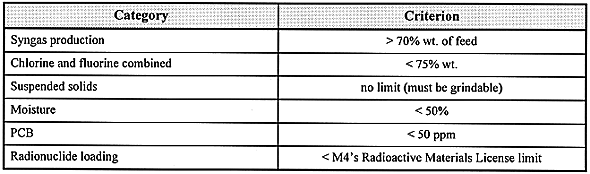
The initial Duke Power treatability study was performed on greater than 1,500 lbs of wastes representative of the MWOLS (Category I) in the utilities' inventories. These wastes met the M4 screening criteria for the MWOLS waste group shown in Table II.
Table II Quantum-CEP® Mixed Waste Organic Liquid
and Sludges Acceptance Criteria
Description of Waste Feeds
The wastes in Category I consist of both halogenated and non-halogenated MWOLS. They are generally light hydrocarbon liquids, contaminated with trace amounts of radioactive and hazardous components. These organic liquids are commonly used in industry as cleaners and solvents. Typical uses for these liquids include parts washing and flushing of process equipment. Most of the non-halogenated organics included in this treatability study were the initial non-hazardous substitutes for more restricted solvents such as 1,1,1-trichloroethane. Halogenated solvent use has decreased due to government regulations, but stockpiles of previously unregulated halogenated organic liquids still exist at many sites where substitutes are now being used.
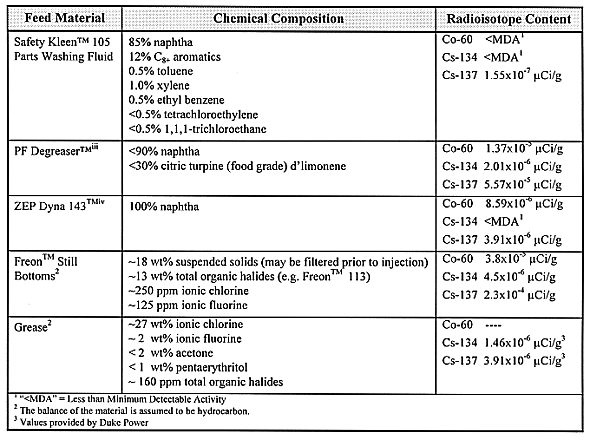
Table III lists the molecular composition of the five types of wastes included in the Category I study as provided by Duke Power Company and the product manufacturers. Two processing scenarios were used in this treatability study. An iron bath was used for non-halogenated feeds and feeds with less than 5% halogen content, and a nickel bath was used for halogenated feeds with greater than 5% halogen content to maximize yield of hydrogen halide (such as hydrogen chloride) for secondary product generation.
Table III Duke Organic Liquid and Sludges Bulk Composition
Experimental Setup
The initial treatability study was performed on bench-scale and pilot-scale Q-CEP® units. The bench scale experiments performed on this waste established the basic operating conditions and the pilot-scale runs confirmed process operability and scale-up. In both cases, feed materials were injected with co-feeds (air or oxygen and methane), dissolved in the molten metal bath, and converted to CEP products, primarily synthesis gas.
The bench-scale experiments were carried out on M4's RPU-2 unit utilizing the Quantum-CEP® system developed for previous radioactive material experiments (see Fig. 1). Three layers of independent containment barriers surround the crucible containing the molten metal bath. The metal charge and any ceramic co-feeds were loaded into the crucible and heated within the Q-CEP® unit. The organic liquids were injected into the molten bath through a lance. Off-gas sample and on-line analytical data were collected upstream and downstream of the HEAP filters and scrubbers.
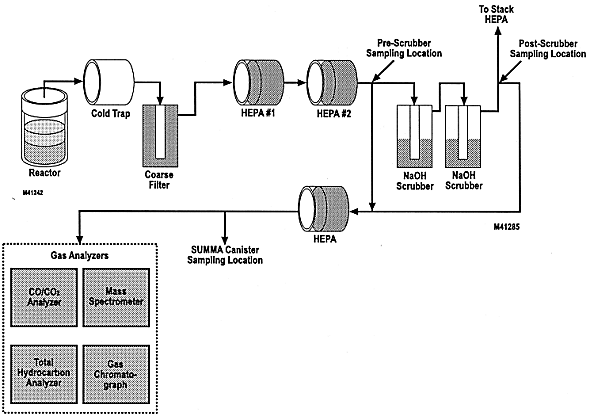
Fig. 1. Schematic of Bench-Scale
Experimental Setup
Pilot-scale experiments were performed on the RPU-3 reactor system (see Fig. 2). Off-gas piping and reactor pressure relief stations are installed at the top of the reactor as well as a port that can be used alternately for lance injection or bulk metal charging. Mixed waste feed as well as oxygen and methane co-feed were injected at the bottom of the refractory-lined reactor through a tuyere. The tuyere atomized the liquid feed and mixed it with the gas co-feed. The gas stream exiting the RPU-3 reactor was cooled and circulated through a knock-out pot and other filter systems to remove particulate species. The gas was then cleaned by caustic scrubbing capturing any acidic gas stream components.
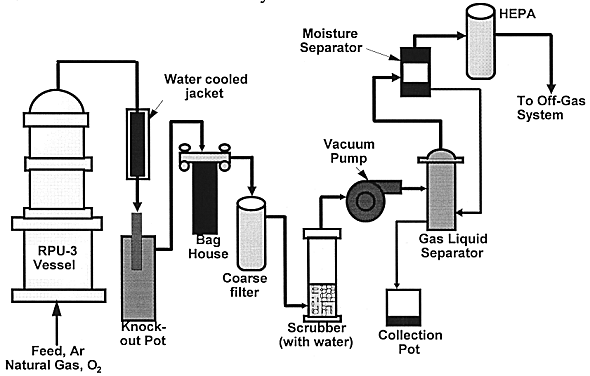
Fig. 2. RPU3 system schematic.
Results
The organic constituent considered representative for DRE calculations was based on its feed concentration and its destruction difficulty, based on EPA guidance.(1) The DRE is defined as the difference between inlet and outlet flows of the constituent divided by its inlet flow. In this study, a DRE was calculated for FreonTM 113 Still Bottoms (1,1,2 Trichloro-1,2,2 trifluoroethane) as shown in Table IV.
Table IV Destruction Removal Efficiency Results

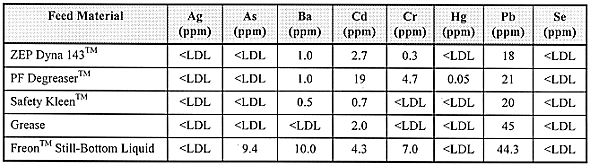
Trace amounts of RCRA metals were present in the Duke Power MWOLS feed. RCRA metal feed concentrations were determined by an outside laboratory using Inductively-Coupled Plasma Emission Spectroscopy and are summarized in Table V.
Table V RCRA Metal Composition for Duke Power Feeds
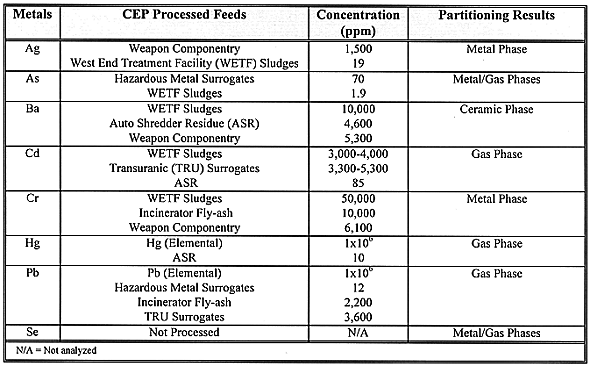
Due to the very low RCRA metals concentrations in the feed, it was difficult to accurately measure their loading in either the molten metal bath product or the off-gas stream due to background interference. Historical data on CEP processing of wastes containing detectable concentrations of RCRA metals (e.g. DOE West End Treatment Facility [WETF] sludges, surplus metal componentry, and auto shredder residue) have demonstrated the partitioning of RCRA metals to the targeted phase as predicted by thermodynamics (see Table VI).
Table VI RCRA Metals Processed via CEP
CEP condensed phase products have been shown to be non-hazardous and appropriate for landfill disposal, if required. Both the metal phase from Duke MWOLS and comparable CEP ceramic phases passed the Toxicity Characteristic Leaching Procedure (TCLP).
A summary of the radioisotope activity levels contained in the Duke Power feeds is shown in Table III. The activity levels in the feeds were very low, with the highest activity nuclide at 2.3 x 10⁻⁴ µCi/g (Cs-137, Freon™ still-bottom liquid). Most of the gamma spectroscopy results reported were below the Minimum Detectable Activity (MDA) due to the low activity of contaminants in the organic solvents. As a result, quantitative closure on radioisotopes was not possible for the Duke Power waste feeds.
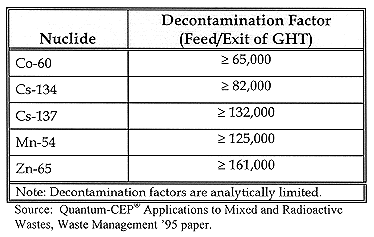
Activity was detected in the headspace and cold-trap post-run samples in both bench-scale and pilot-scale runs, supporting the partitioning of Cs to the off-gas in the Q-CEP® system. The absence of Co-60 in the off-gas samples supports partitioning of the isotope to the charge. This data was consistent with previous handling of Co and Cs from contaminated ion exchange resins using Quantum-CEP® technology, which verified the partitioning of Co to the metal charge and Cs to the gas phase. Table VII summarizes the representative decontamination performances in Q-CEP systems.
Table VII CEP Decontamination Factors in Processing Contaminated Ion
Exchange Resins
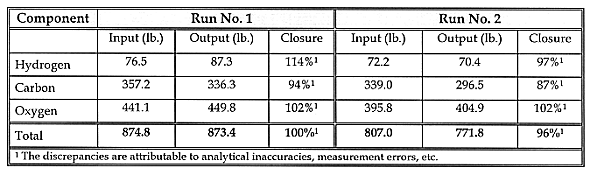
An overall mass balance was determined by measuring the inputs and outputs of the RPU-3 unit during the pilot-scale experiments. The mass balance closure for the pilot-scale experiments, which was performed for the three most abundant elements present in the feed, carbon, hydrogen, and oxygen, is shown in Table VIII. A consistent mass balance closure was demonstrated for the major feed elements.
Table VIII Pilot-Scale Mass Balance
The primary product from processing MWOLS in Q-CEP® systems is synthesis gas (or syngas), a mixture of carbon monoxide and hydrogen. It is a commercial chemical product with demonstrated value, markets, and specifications. Syngas produced by Quantum-CEP® technology is virtually indistinguishable from syngas produced by alternative methods, the most predominant of which is the gasification or steam reformation of natural gas, coal, petroleum coke, or other hydrocarbons. All toxic organic constituents in the representative waste feed are completely dissociated into basic elements so that virtually none of these organics are present in the syngas. Syngas can be used as a commercial chemical product or as a fuel, as it exhibits good calorific value and a strong reducing character. The syngas will meet required boiler specifications, as well as federal, state and local requirements for fuel combustion in the same manner as other commercially available syngas.
The amount of syngas produced from the MWOLS will vary depending upon contaminants and the amount of sludge present in the waste feeds. Typically 70 to 90-plus percent by weight of the feed is converted to syngas. Small amounts of ceramic and metal will be produced as well. For example, for the Duke Power MWOLS, the amounts of ceramic and metal expected to be generated during full-scale processing are less than 2% and less than 0.1% of the total system output, respectively, with the balance of the feed primarily converted into syngas. The syngas produced from Q-CEP of MWOLS at the M4 Technology Center will be used to produce steam to decontaminate drums and equipment, provide heat to a wastewater evaporator, and supplement building heat at the Technology Center.
On April 19, 1996, the US EPA proposed to exclude hazardous waste-derived syngas fuel from the definition of solid waste, and, hence, from RCRA hazardous waste regulation, provided the syngas meets certain specifications (61 Federal Register 17465). The anticipated regulation may include limits with respect to trace organic, hydrogen sulfide, chlorine, and nitrogen compounds as summarized in Table IX. At the time the syngas fuels specification was proposed, appropriate test methods for the various contaminants in the specification were not identified by EPA. M4 and MMT have been working with EPA to identify appropriate test methods to demonstrate compliance with the proposed specification.
Table IX EPA Proposed Syngas Fuels Specification
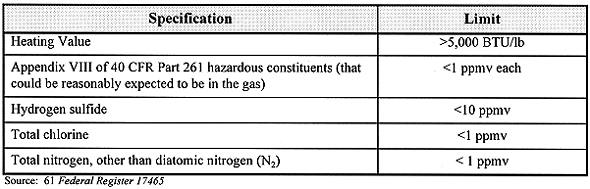
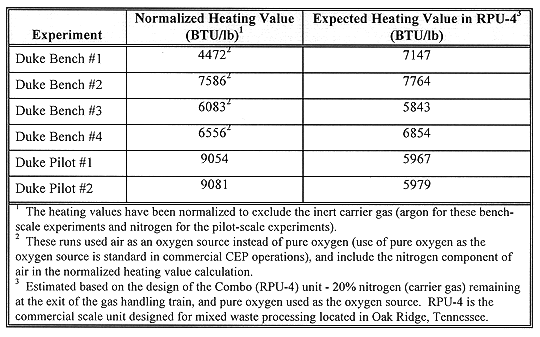
Syngas from the Duke MWOLS treatability study meets the proposed minimum heating value for syngas as shown in Table X. The syngas from the RPU-4 (commercial) unit is expected to fully meet EPA's proposed syngas fuels specification. CEP capacity to destroy hazardous organic species is illustrated by consistent destruction removal efficiencies 99.9999%. Hydrogen sulfide, chloride species, and nitrogen compounds are readily removed using standard chemical industry unit operations, such as caustic scrubbers and filters.
Table X CEP Synthesis Gas Heating Value
CONCLUSIONS AND PATH FORWARD
This paper summarized the processing data of Duke Power's MWOLS using Quantum-CEP® technology. The recycling viability of Quantum-CEP® technology was demonstrated by effective destruction of hazardous organic constituents, targeted radionuclide partitioning, and generation of a syngas product for fuel use. This performance data led to the designation of Quantum-CEP® technology as a use/reuse technology by the State of Tennessee for the broad recycle category of MWOLS.
The MWOLS category is the first of the broad recycling categories conceived by M4, developed using data from bench and pilot processing of Duke waste, and applicable to MW having similar characteristics, both legacy and newly generated. The recycling approval will allow other MW generators to send their wastes directly to M4 for processing once the wastes meet the feed screening criteria. This strategy minimizes the duplication of treatability study efforts, and allows effective and extensive use of Quantum-CEP® technology on similar MW feeds.
M4 is currently performing the treatability studies on the final two categories of Duke wastes, i.e., Freon™ filters and miscellaneous organic and inorganic solids. A recycle application for organic and inorganic solids will be submitted to the State of Tennessee in the spring of 1997 and a decision is anticipated in the third quarter of 1997. This recycling strategy allows effective deployment of Quantum-CEP® technology in MW applications, which meets both the regulatory and environmental concerns in US MW processing.
REFERENCE