Table I Annual Effective Dose Equivalent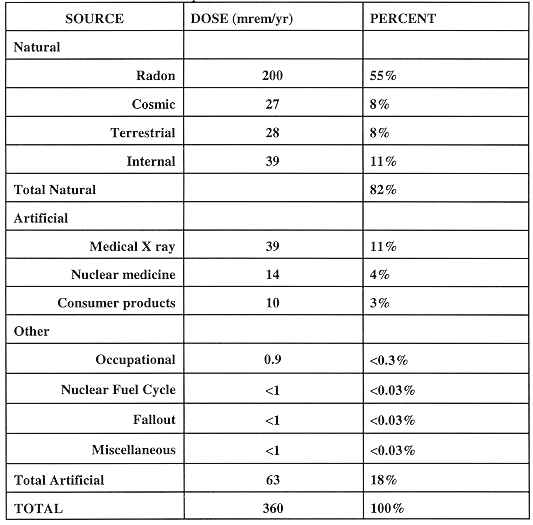
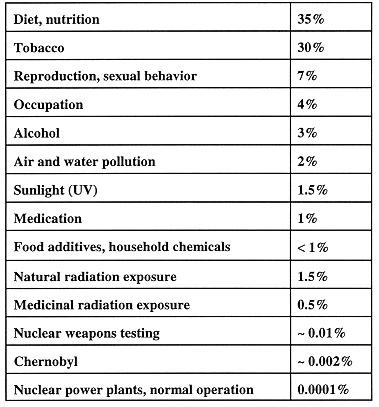
Table II Relative Contributions of Cancer
George E. Dials
Manager
U.S. Department of Energy
Carlsbad Area Office, Carlsbad, NM 88221
ABSTRACT
In 1978, a group of psychologists asked a representative sampling of the populace, and a panel of risk-assessment experts, to rank 30 activities and technologies by risk. The two groups had strong correlation in various areas. For example, the risk of motor vehicles placed number one by the experts and two by the public. Large discrepancies existed in other areas: the public ranked nuclear power number one, while the experts ranked it a relatively safe number 20. Experts assessed x-rays at seven, while the public graded it 22. (1)
People have always been concerned with risk, defined as the probability that something harmful will occur. How we interpret and use this information influences how we live our lives, and how our society allocates limited resources to solve problems, real or perceived.
The Carlsbad Area Office (CAO) was formed in December 1993 with a mission to protect human health and the environment by opening and operating the Waste Isolation Pilot Plant (WIPP) for safe disposal of transuranic radioactive (TRU) waste and by establishing an effective system for management of TRU waste from generation to disposal. This paper discusses the CAOs rational response to the perceived risk of radioactive waste disposal while continuing on its path to opening.
The WIPP, a first-of-a-kind facility, will reduce radiation risks and increase the protection of human health and the environment by facilitating the removal of existing TRU waste from surface and near-surface storage areas near population centers to a repository located at a depth of approximately 650 meters (2,150 feet) in an uninhabited area. Over 20 years of site characterization efforts at WIPP have resulted in a solid understanding of its geology. A simple repository configuration was designed and constructed to achieve maximum benefit from geological processes like creep closure. The successful operation of the WIPP will enhance public confidence in deep geological disposal of radioactive waste both in the USA and abroad.
Safety is CAOs number one priority. In October 1994, WIPP was the first DOE site to receive "Star" status under the Voluntary Protection Program, an industrial safety program originally established to recognize exceptional safety performance in private industry. The WIPP site has also been recognized by the New Mexico Inspector of Mines as "Operator of the Year" for the last eight consecutive years.The DOE is committed to interaction with all stakeholders regarding major decisions. Regulators must be confident that all stakeholder concerns are considered before compliance certification. Our aim is to identify and resolve concerns before they become more difficult and costly to resolve.
INTRODUCTION
All of life is a risk. Take a deep breath and hold it. Youve probably inhaled molecules of Earths deadliest toxins: dioxin, radon, benzene, formaldehyde, and, believe it or not, youve inhaled millions of atoms of that most feared radioactive element - plutonium. How do we understand the effect of something so small on the human body, and should we be concerned? At what point do real risks begin and others remain negligible?
We have always been concerned with risk, defined as the probability that something harmful will occur. How we interpret and use these risk values is influencing how we live our lives, and how our society allocates limited resources. The perception of risk is too often confused with real risk. Few subjects elicit more confusion than the popular perception of the hazards of exposure to radioactive wastes. This paper addresses the public perception of radioactive risk and how the Department of Energy (DOE) Carlsbad Area Office (CAO) responds to it.
COMPARATIVE RISK
Each of us makes hundreds, if not thousands, of risk assessments every day. How fast will we drive if were late for an appointment? Is speeding, with its risk of a ticket and increased chances of an accident, worthwhile if the meeting is important? It is difficult to estimate risks from radiation, for most of the radiation exposures that humans receive are very close to background levels. In most cases, the effects from artificial radiation are not distinguishable from natural radiation. In the early part of the century, researchers and users of radiation were not as careful as we are today. The information received from medical users in early national laboratory experiments, the survivors of the atomic bombs in Japan, and studies from the Chernobyl accident, have given us most of what we know about radiation and its effects on humans.
Humans have been exposed to radiation from natural sources since the dawn of time. These sources include the ground on which we walk, the air we breath, the food we eat and the solar system on the whole. Everything in our world contains small amounts of naturally occurring radioactive atoms like Potassium 40, Radium 226 and Radon 222. These are either left over from the creation of the world (like Uranium and Radium) or made by interactions with cosmic radiation (like Carbon 14 and Tritium). The earth is constantly receiving cosmic radiation from outer space. These natural sources of radiation make up approximately 82% of the average annual dose to the US public.
Cancer is the second highest cause of death (behind heart disease) (3) and is the risk people worry about more than any other. One-third of cancers are caused by smoking and smoking-related behavior, another third by diet, and the remainder mostly by lifestyle choices. Environmental carcinogens accounted for only 2 percent of all cancers. (3)
Table I Annual Effective Dose Equivalent
Table II Relative Contributions of Cancer
Clearly, the risk from radiation is extremely low.
The real question is: how much will radiation exposure increase your chances of cancer death over your lifetime?
PUBLIC PERCEPTION
In 1978, a group of psychologists asked a representative sampling of the populace, and a panel of risk-assessment experts, to rank 30 activities and technologies by risk. The two groups had strong correlation in some areas. For example, the risk of motor vehicles placed number one by the experts and two by the public. But large discrepancies existed in other areas: the public ranked nuclear power number one, while the experts ranked it a relatively safe 20. Experts put x-rays at seven, while the public graded it 22. The reasons for these perceptions are well documented but beyond the scope of this paper.
Table III Activity and Technology Risk Ranking
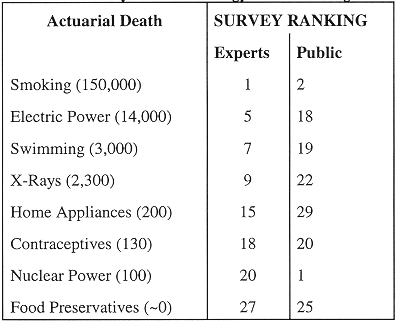
Another way of looking at risk is to look at the Relative Risk of 1 in a million chances of dying of activities common to our society. (4)
Other numbers are even more disturbing. For example, unemployment beats out steeple jacking as the riskiest "occupation." So heightened is your risk of suicide, liver cirrhosis from drinking alcoholic beverages, and other stress-related diseases while not working that being unemployed rates as the equivalent of smoking ten packs of cigarettes a day. Each cigarette you smoke cuts five minutes off your life span.
One person a year dies from ingesting a toothpick. This minuscule death rate is actually higher than the rate attributed to widely feared asbestos. More people die using crosswalks than while jaywalking. (Most people use the crosswalks, and jaywalkers tend to be more alert.) Do you worry about picking up a germ while visiting a friend in the hospital? You are more likely to acquire germs from the money in your pocket right now. One out of every ten coins and almost half the paper currency carry infectious organisms.
We must balance the risks with the benefits. It is something we do often. We want to go somewhere in a hurry; we accept the risks of driving for that benefit. We want to eat fatty foods; we accept the risk of heart disease. Radiation is another risk which we must balance with the benefit. The benefit is that we can receive medical treatments, conduct scientific research, generate electricity, and have a sustainable national security based nuclear deterrent. The risk is a small increase in cancer. Risk comparisons show that radiation is a small risk compared to risks we take every day. We have studied radiation for nearly 100 years. It is not a mysterious source of disease, but a well understood phenomenon, better understood than almost any cancer causing agent to which we are exposed.
One objective of the CAO is to overcome all the misconceptions held by stakeholders. For example, some people along the TRU waste transportation corridors fear that they will suffer harmful radiation effects from the shipments during transport. This fear is fed by the often overstated, emotional attacks by those special interests opposed to nuclear activities and supported by non-factual statements about the hazards or risks from low-level radiation exposure.
Transportation is the most visible component of the TRU waste disposal program. Since the beginning of this countrys nuclear program, there have been more than 2,500 shipments of spent nuclear fuel and many more shipments of low-level waste. The safety record to date is excellent. Transportation of nuclear waste is of particular concern to states and Native American tribes along the main transportation routes to WIPP. DOE, State and tribal governments, and several national and regional transportation organizations are actively preparing for potential shipments of transuranic waste to the facility. These preparations include the development of policy and procedures for preventing accidents, responding to emergencies and bad road and weather conditions, conducting inspections, and providing equipment to local first responders.
The Transuranic Package Transporter (TRUPACT II) is the safest method ever devised for transporting any hazardous material in the US. Packaging provides the primary barrier to the release of radioactive contents during shipment. The TRUPACT II containers have been especially designed to ship waste to the WIPP. This system meets or exceeds every Department of Transportation and Nuclear Regulatory Commission regulation. We must keep in mind that most TRU wastes are alpha-radiation emitters and that alpha radiation is of such low energy that it will not penetrate the skin. Thus, the TRUPACT II, constructed of double-lined stainless steel to ship containers of waste already triple contained, is exceedingly safe. There is virtually zero risk of radiation exposure to the public from TRUPACT II shipments. In the worst-case scenario at the WIPP, the maximum exposure for an off-site individual is only 25 mrem. Clearly, people accept this level of risk on a daily basis.
THE PROBLEM
The DOE is responsible for 137 sites in 33 states nationwide, representing a total surface area of approximately 8,500 square kilometers. Many of these sites contain areas with radioactively contaminated structures, soil, and groundwater. Recent estimates indicate the nuclear weapons complex created an estimated $300-billion cleanup legacy that is the single largest environmental program in history. (5)
Within the DOE complex, it is estimated that 140,000 cubic meters of TRU waste exists. (6) This waste is dispersed across the country at 25 sites with five major sites containing 96% of the waste. Approximately 102,000 cubic meters is already packaged. It is contained in a variety of metal drums and wooden and metal boxes. Since 1970, the waste has been placed in retrievable storage, including earth-covered mounds, concrete culverts, and other types of facilities. Over 70% of the drums are over 10 years old and, according to a resent GAO report, 20-30% of the drums stored in earth-covered mounds contain corrosion pinholes or are beginning to deteriorate.
Continued weapons production, nuclear research and development, the ongoing environmental cleanup of nuclear weapons complex sites, the dismantling of the nuclear weapons arsenal and remediation and decommissioning of facilities are expected to generate another 38,000 cubic meters of TRU waste. The dismantling of nuclear weapons will result in additional radioactive waste that might meet the requirements/criteria for TRU waste classification. However, both the classification and estimation of potential TRU waste from the dismantling of nuclear weapons also remain to be established.
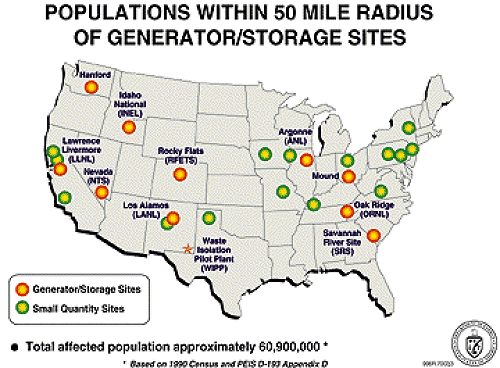
Fig. 1. US Populations at risk by TRU
waste storage, 1996.
Over 60 million people live within a 50 mile radius of TRU waste in temporary storage. Taxpayers are supporting a budget of approximately $400 million a year to maintain this waste in temporary storage.
Global consensus states that the science and engineering involved in the development of a TRU waste repository is attainable and safe. The disposal of TRU waste, however, involves ethical, institutional, and social considerations. These considerations,in combination with evolving regulations, have proven to be formidable, and hitherto unresolved, challenges to the development of operating TRU waste repositories in the USA and abroad. As a result, TRU waste continues to amass in temporary facilities around the world pending the development of acceptable TRU waste repository programs. The current lack of a TRU waste repository imposes severe constraints on the development of nuclear energy/power, on the timely and cost-effective dismantling of nuclear weapons, and on the environmental cleanup of former nuclear weapons production sites. Consequently, in the USA, the timely opening and safe operation of the WIPP repository would provide increased protection of human health and the environment by moving existing TRU waste from near-surface-based temporary storage facilities to a TRU waste repository located at a depth of approximately 650 meters. The opening of the WIPP repository would also facilitate the safe disposal of TRU waste generated by the cleanup of radioactively contaminated sites and the ongoing dismantling of a major portion of the nation's nuclear weapons' arsenal. With time, a WIPP repository, certified and operated in compliance with possibly the strictest human health and safety and environmental protection standards in the world, should enhance public confidence in the safety of deep geologic disposal of TRU waste both in the USA and abroad.
THE SOLUTION
A 1957 study by the National Academy of Sciences suggested bedded salt formations as a likely solution for deep geological nuclear waste disposal. After further study and national site evaluations, the WIPP site was proposed in the early 1970s as a potential site for a TRU waste repository. Based on 18 years of extensive site characterization, including the development and testing of an underground facility in the candidate repository rock salt formation (the Salado Formation) and extensive laboratory and modeling activities, the DOE concluded in a 1992 performance assessment that the WIPP site was suitable for the operation of a safe TRU waste repository.
The WIPP repository is located in the Salado Formation at a depth of approximately 655 meters below the ground surface. The Salado Formation is a 250-million-year-old, regionally extensive, 600-meter-thick, stable, sedimentary evaporitic sequence of rocks dominated by rock salt (mainly halite). Rock salt was recommended by the National Academy of Sciences (NAS) in 1957 as a preferred host rock for the disposal of radioactive waste mainly because of its generally favorably low flow/transport, deformational, and high thermal conductivity characteristics. A 1992 report from the NAS notes that most countries have concluded that "the best means of long-term disposal...is deep geological emplacement...." A 1996 report from the NAS concluded that the WIPP site is inherently safe and very suitable for a TRU waste repository, even in the unlikely event of disturbance caused by highly conjectural human intrusion scenarios. (7)
The 6.4 by 6.4 kilometer (km) WIPP Site is situated 42 km Southeast of Carlsbad, New Mexico in an arid and sparsely populated desert area. Based on the results from the site characterization program (including laboratory testing, model developments, and analyses), the construction of an underground test facility at an approximate depth of 650 meters below the surface in the center of the candidate host rock, the Salado Formation, commenced in 1982. The current baseline/reference WIPP repository design consists of eight panels. Each panel is subdivided into seven TRU waste emplacement rooms approximately 10 meters wide, 4 meters high, and 91 meters long. Other dimensions of the proposed WIPP repository and the existing facility for experiments are shown on Fig. 2. The facility waste capacity is limited by law to 175,600 cubic meters.
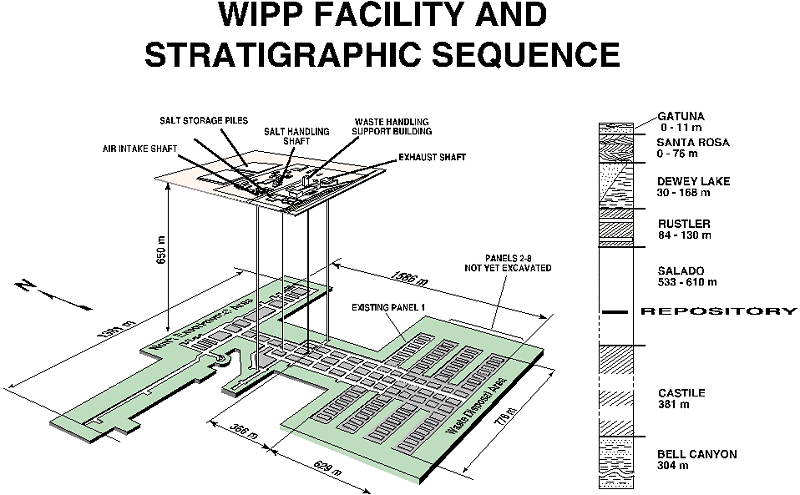
Fig. 2. Schematic illustration of the
WIPP site
The construction and testing of the underground facility as well as all facilities and equipment required to safely commence the receipt, handling, transporting, and emplacement of TRU waste were essentially completed in 1988.
In April 1994, the CAO presented a milestone schedule accelerating the opening of the WIPP from December 2001 to June 1998. Based on timely achievement of all milestones and a reassessment of the WIPP program, the opening of the WIPP was advanced another two months in October 1995 with a target date for opening WIPP of April 1998. In September 1996, legislation was signed that eliminated a six-month waiting period and moved the opening date to November 1997. CAO's successful strategy and schedule for cost-effective and timely opening of the WIPP repository include the following four main objectives:
Pursuant to the WIPP Land Withdrawal Act of 1992, Public Law 102-579 (LWA), the U.S. Environmental Protection Agency (EPA) is responsible for the development of TRU waste disposal regulations at the WIPP site. The applicable regulation (Code of Federal Regulations, Title 40, Part 191 [40 CFR 191]), initially promulgated in 1985 and remanded in court in 1987, was repromulgated by the EPA in December 1993. As the EPA promulgated criteria (40 CFR 194) by which the regulations are to be specifically applied to WIPP and finalized these in February 1996. Compared to other domestic and international human health and safety and environmental protection standards, 40 CFR 191 is in many respects the most stringent and prescriptive regulation in the world.
The WIPP project is now in the final stages of the licensing effort with all licensing documents prepared and under regulatory agency review. We are confident that we will obtain the necessary permits to commence operations in November 1997.
As now planned, within nine years after its opening in November 1997, more than 51% of the defense-related TRU waste will be disposed deep underground at the WIPP, thereby removing potential risk associated with radiation exposure from TRU waste at 25 of the current generator/storage sites.6 This results in reducing the population at risk by 57 million people. This represents real progress in a rational way. Its a critical first step in solving the national nuclear waste problem.
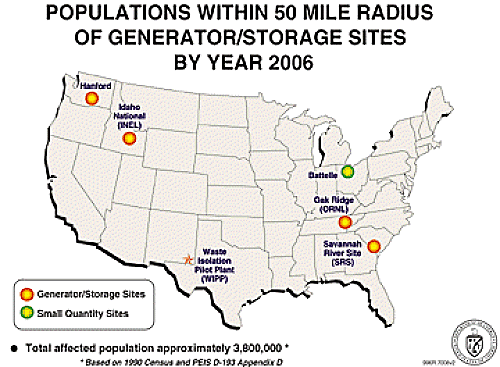
Fig. 3. US populations at Risk by TRU
Waste Storage, 2006
CONCLUSION
Several TRU waste storage sites are located in the vicinity of sizable population centers. The opening of the WIPP repository will drastically reduce risks to human health and the environment by facilitating the removal of existing TRU waste from surface-based and near-surface-based storage facilities and contaminated sites, to a TRU waste repository located in a virtually uninhabited desert area at a depth of approximately 650 meters below the surface in the center of a stable and virtually impermeable 600-meter thick rock salt formation. If there are any risks to the public and/or the environment from the radiation emitted by TRU waste, it is orders of magnitude greater where the waste is today, on the surface, than where we are trying to put it - 650 meters deep in a 250 million year old salt formation.
The WIPP is a world-class first-of-a-kind facility for safe disposal of long-lived TRU waste. It will be the first permanent repository licensed under a rigorous, ultra-conservative regulatory program requiring a risk-based performance assessment to demonstrate compliance with environmental standards for 10,000 years. Its continued safe operation in compliance with hazardous waste regulations and one of the strictest environmental radiation protection standards in the world will enhance public confidence in the safety of deep geological repositories both in the USA and abroad.
Whether or not you live near a site that stores TRU waste, the success of the WIPP will have a significantly positive effect on public health and on the economy and environment in which you and future generations will live. Any taxpayer, electricity consumer, environmentalist, public health advocate, or individual who is interested in solving this national dilemma of nuclear waste management, should become a champion for the WIPP.
REFERENCES