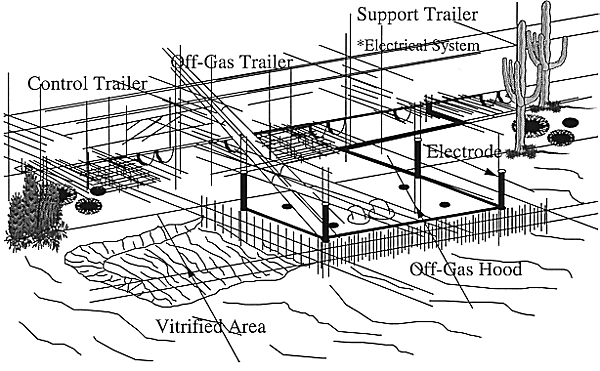
Fig. 1 ISV Process
Equipment
Thomas F. Seacord
Graduate Student
Department of
Civil and Environmental Engineering
Clarkson University, Potsdam NY
13699-5710 USA
ABSTRACT
An interdisciplinary student design team produced a conceptual design and project plan for the safe and cost effective treatment of hazardous and radioactive wastes which reside in four different underground storage tanks. To treat these wastes, it was decided that an ex-situ treatment would cause unnecessary risk of exposure to radiation and hazardous chemicals. For this reason, in-situ vitrification (ISV) was chosen to treat the site. ISV offers protection to workers and the environment while it stabilizes contaminants that are not destroyed or sent into the off-gas treatment system, minimizes wastes, and remains cost effective. Legal and regulatory requirements were identified and actions were taken for compliance. Legal and regulatory requirements included: community relations, OSHA training for workers, environmental regulations for off-gas treatment and leachate analysis, and disposal of secondary waste from the off-gas treatment system. Overburden soil was added or taken way from the site of each tank to provide adequate shielding from radiation while achieving optimum conditions for vitrification. A health and safety plan was produced which provided for optimal worker and community safety by monitoring radiation levels and establishing an emergency action plan. A community relations plan was implemented early in the design process. A sample community was assembled and accepted the proposal of using ISV. Their concerns were identified and incorporated into the design. A plan for communication was established which involved meetings, brochures and an 800 number to provide further information and address concerns. An economic assessment and business plan indicated that ISV was far superior to ex-situ treatment and disposal noting that disposal costs alone were greater than the entire ISV operation.
INTRODUCTION
A design team composed of twelve undergraduates in Civil and Environmental Engineering, Chemical Engineering and Industrial Hygiene, and three Master of Engineering students at Clarkson University produced a conceptual design and working bench scale model for an in-situ treatment system capable of remediating hazardous and low-level radioactive waste from four underground storage tanks. The design was dependent upon specifications for tank material, size and contents as set forth by the Waste Education and Research Consortium (WERC) for the 1996 Environmental Design Competition. Soils surrounding the tanks are also contaminated. The contest task description states that a process (in-situ or ex-situ) should be chosen and a detailed engineering plan should be developed which addresses implementation and long term monitoring. Regulatory and economic concerns must also be addressed.
Having an interdisciplinary team was essential to solving this problem with the proper amount of emphasis placed on each component of the design (technical, economic, regulatory and health management). Given the health and economic impediments associated with ex-situ treatment and tank removal, an in-situ treatment, In-Situ Vitrification (ISV) was chosen. ISV offers benefits in terms of reduced worker exposure, and destruction and stabilization of waste in addition to cost-effectiveness.
ISV PROCESS DESIGN
According to the WERC task description, the underground storage tanks varied in both size (500 to 50,000 gallons) and composition (steel and concrete). All tanks were are assumed to be located in Las Cruces, New Mexico. The tanks contained wastes including halogenated solvents, volatile organics (VOCs), heavy metals, radionuclides, and poly-chlorinated biphenyls (PCBs). If these tanks were left in place they would pose a threat to human health and the environment as the contents leaked into the surrounding soils. ISV minimizes contaminant migration by melting the contaminated soil and tanks in-place by applying current to electrodes inserted into the ground. The melting of the contaminated soil and tanks produces a chemically inert crystalline block which incorporates hazardous and radioactive contaminants not destroyed by the heat of the melt (1). This block has been proven to be extremely durable over time. Gases escaping from the melt are captured by a hood placed over the melt and then routed through an off-gas treatment system.
The student design team selected ISV based on past performances at various waste sites containing mixed wastes. The ISV process design proposed is almost fully automated, provides superior effectiveness in both the long- and short-term, reduces worker exposure, and minimizes waste generation, transport and landfilling. The following sections outline the key components to the process design.
Site Preparation: Ground Penetrating Radar (GPR) will be used to verify the exact location of each tank (10). Overburden soil will be added on top of each tank to provide radioactive shielding for workers conducting on-site activities. Worst-case radiation dosage calculations provide overburden depths for each of the tanks (2-9). To provide a conductive media in the void spaces of each tank, sand is pumped into each tank. In order to fill these tanks with sand precautions are taken to prevent an explosion. A hollow punch with a N2 supply attached to a pneumatic hammer is used to punch holes in each tank so sand may be pumped in. A N2 gas purge will help prevent explosion while combustible gases are monitored. In addition, holes will be punched in the sides of the tanks to direct volatile constituents around the sides of the melt and into the off-gas collection hood. It is desirable to direct the gases in this manner to prevent them from bubbling through the melt, causing structural flaws and cracks in the final vitrified monolith (10).
Operations: A complete ISV operation, as shown in Fig. 1, is completely mobile and consists of three process trailers, off-gas collection hood(s) with electrodes attached, and electrical equipment. Three process trailers are designed to isolate operators from radioactive contaminants and contain the off-gas treatment equipment, transformers, and process control equipment. The off-gas hood and electrodes will be lowered onto the site by crane. This hood is 60 ft2, with a maximum adjustable electrode spacing of 22.5 ft in a square arrangement. Limitations on the maximum electrode spacing will require 2 and 3 complete electrode placements and melts, "settings", to completely vitrify Tanks 1 and 2 respectively. Tanks 3 and 4 require only one set each. During the vitrification of Tanks 1 and 2, additional hoods will be placed over the areas of the tank not being vitrified to capture any off-gas that may emanate from these regions due to the operations occurring areas adjacent. Glass frit and graphite powder are placed on the ground between electrodes to initiate the flow of current through the soil. Once the current has been established, the melt formed will progress downward until it encompasses the tank and surrounding soil forming a glass monolith. Power will be supplied to the electrodes by a Scott-Tee transformer with variable voltage taps. A back-up generator will be available in the event of a power outage. Electrodes will be supplied power for approximately 120 hours. The final volume of each vitrified monolith will be 540, 760, 125, 190 yd3 for Tanks 1 though 4 respectively.
Fig. 1 ISV Process
Equipment
The off-gas collection hood captures VOCs, radionuclides including cesium and strontium, and other volatile hazardous constituents of the tanks' waste. From the hood, all air is conveyed to the off-gas treatment trailer. A series of air pollution control devices, shown in Fig. 2, are utilized to remove contaminants from the off-gas.
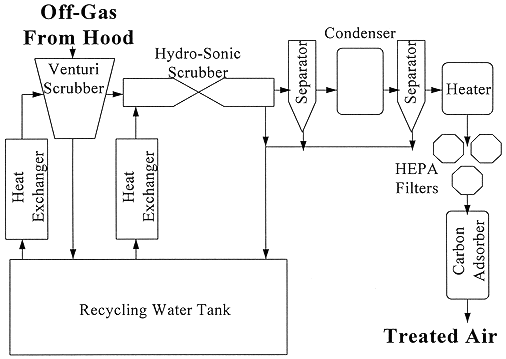
Fig. 2 Off-gas
Treatment Control Devices
The venturi and hydro-sonic scrubbers remove radionuclides and particulates. Heat exchangers and separators are used to reduce the temperature of the gas and minimize the formation of aerosols. At the end of the process, dual high efficiency particulate air (HEPA) filters provide a factor of safety in removal of particulates and radionuclides, while carbon adsorption is used to remove any remaining organics not thoroughly combusted in the hood (1). Air monitoring will be performed during vitrification according to standard practice (40 CFR Part 60, Appendix A) for dioxins/furans, radionuclides, VOCs and particulates. Dioxins/furans are of concern as they are common hazardous byproducts of combustion. Detection of these compounds below the Applicable or Relevant and Appropriate Requirements (ARARs) will provide evidence of the quality of the combustion process.
Secondary wastes produced by treating the off-gas include contaminated HEPA filters, granular carbon and scrubber solution. Contaminated filters, granular carbon, and scrubber solution from one set will be vitrified into the proceeding set, so only the wastes from the final set will have to be disposed of in a mixed waste landfill (1). To reduce the amount of contamination in the final wastes, the tanks will be vitrified in order from most to least contaminated: Tank 3, Tank 4, Tank 1, Tank 2. Tank 3 poses the most immediate threat because it is a concrete septic tank, and is not designed to contain radioactive and hazardous wastes. Tank 4 will be vitrified next because it is very close to the surface and contains high levels of radioactivity. Tank 1 was given priority over Tank 2 because it contains high concentrations of VOCs, PCBs and radionuclides. Secondary wastes will be a concrete micro/macro-encapsulation of the HEPA filters, granular carbon and scrubber solution from the last melt.
Closure and Monitoring: Quality assurance/quality control (QA/QC) will be performed on site following vitrification. Core sampling around the monoliths will demonstrate that contaminants have been completely stabilized. In addition to backfilling the hole where the vitrified monolith now lies, a flexible membrane barrier will be placed over each site to redirect rain water around the monolith. Backfill will be added to a depth that will be calculated using the same worst-case procedure used in the site preparation overburden calculations (2-9). A layer of topsoil will be added to provide a vegetative cover. All equipment used on-site, including the off-gas treatment equipment, off-gas hood and excavation equipment will be acid washed and wipe sampled to confirm decontamination. Spent scrubber solution, granular carbon, and HEPA filters remaining at the end of the off-gas treatment process will be encapsulated in concrete and shipped to a mixed waste landfill for disposal. Long-term QA/QC will be implemented by taking quarterly soil samples. Research has shown that vitrified monoliths can be expected to last over 1,000,000 years (1).
METHODS FOR TESTING OF UNIT OPERATIONS/PROCESSES
QA/QC will be performed throughout the vitrification process. A TCLP test (40 CFR 261) will be performed on the monolith and the surrounding soil. These tests will demonstrate the stability of contaminants within the monolith and determine the extent of migration of species into the soil. Calcium, cesium, strontium, cobalt and lead concentrations in the monolith leachate and lead in the soil leachate will be determined by Atomic Absorption Spectroscopy (AAS). Organic compound concentrations will be determined by gas chromatography/ mass spectroscopy (12). Concentrations found in the leachate will be compared to the UTS (40 CFR 268) and other ARARs to ensure compliance. Calcium will be analyzed as an indicator of metal leachability because it is the most abundant metal in the waste. Compressive strength tests on monolith cores will also be performed to further demonstrate monolith durability(13). All concrete cylinders created to encapsulate the air treatment residuals have and will be subjected to compressive strength testing (13) and those which do not contain macroencapsulated HEPA filters will also be subjected to TCLP analysis. TCLP analysis exposes the interior of the cylinders, and is not appropriate for macroencapsulated materials (14).
RESULTS OF TECHNICAL ASSESSMENT
Tests performed by Clarkson students gave encouraging results and demonstrate the superior qualities of ISV treatment. Other tests performed by various consultants at Oak Ridge National Laboratory (ORNL) confirm these results.
Within experimental error, the ISV product from the Clarkson tests showed lead below the UTS (40 CFR 268) limit of 0.37 ppm in TCLP leachate. Results indicate 99.86% retention of Ca in the vitrified mass. Clarkson tests also showed 99% retention of Sr in the interior of the vitrified mass and 93% retention in the exterior portions.
ORNL tests gave similar results, showing negligible amounts of 137Cs and 90Sr in TCLP leachate (15). Results from ORNL also indicate that 99-99.999% of Cs is retained in the monolith (16). Variability was due to the type of soil being vitrified. TCLP tests also indicate that Cd, Cr, and Pb were below detection limits and the leachate was not hazardous (16). The results of these tests showed compliance well within the regulatory requirement of the UTS for hazardous materials As, Ba, Cd, Cr, Pb, Hg and Ag. Using x-ray fluorescence, contaminants in the glass monolith were found to be evenly distributed, demonstrating a homogenous melt (16).
In addition to tests performed on the monolith, it is also important to sample surrounding soil to demonstrate no migration of contaminants during vitrification. ORNL tests show no migration of 137Cs and 90Sr from soil extracted below the monolith. However, some 137Cs was observed in partially reacted soil near the edge of the melt. Testing of the air scrubber solution from the ORNL air treatment system found that the solution removed 96% of 137Cs and 92% of 90Sr released from the melt (15).
Spent scrubber solution from Clarkson's prototype off-gas treatment system contained small amounts of Cs and Sr. Concrete cylinders produced using spent scrubber solution were subjected to compression testing and TCLP. The results of the compression tests yielded a 7 day compressive strength of 560 psi, well above the required 65 psi for a mixed waste landfill (17).
ECONOMIC ASSESSMENT AND BUSINESS PLAN
Once the environmental impact statement and permits have been issued, the total project time is approximately 20 weeks. During this time frame site preparations, set up, vitrification and demobilization occur (1). Community relations are on going from the initial stages of the project, before permits are attained.
The total cost of the project, including profit and overhead, is estimated to be approximately $3 million. All equipment costs have been multiplied by a correction factor. Staff on the project site will include project engineers, heavy equipment operators, ISV control operators, skilled laborers, electricians and certified industrial hygienists (11). Table I outlines the major projected expenses for this project.
TABLE I In-Situ Vitrification Process Costs (1996
dollars)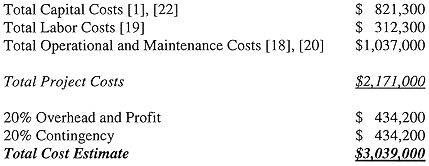
A quality assurance program will consist of sampling and testing to ensure the effectiveness of the entire operation. An oversight committee consisting of members from the community, regulatory agencies, and WERC representatives will be established as part of the business plan to ensure that QA/QC and site access control will be implemented over the duration of long-term site management.
LEGAL, HEALTH AND REGULATORY CONSIDERATIONS
Contest rules specified that this site be treated as a Comprehensive Environmental Response, Compensation, and Liability Act (CERCLA) site. Any remediation activities conducted are subjected to clean up requirements set forth in CERCLA regulations, 40 CFR 300, Subpart E. All undertakings dealing with this site are also subject to the scrutiny of federal, state, and local agencies, including the Environmental Protection Agency (EPA), its state equivalent, the New Mexico Environment Department (NMED), and all other local agencies of Las Cruces, New Mexico which set applicable guidelines.
Based on site data provided by WERC, it was assumed by the student design team that the site in question has been placed on the National Priorities List (NPL), and that a Remedial Investigation (RI) has been performed. Thus, the following section has been written as though ISV is being reviewed for a site Feasibility Study (FS). Upon completion of the FS, a recommendation that ISV is the most appropriate remediation technology for the site in question should be submitted to the EPA and NMED. These agencies will review this recommendation, and upon their agreements, a Record of Decision (ROD) will be announced to inform the public of the selected remediation technology, which will be implemented in and documented by the Remedial Action Plan (RAP). Implementation of the RAP includes applying for any and all necessary permits, and complying with all applicable and relevant federal, state, and local standards and guidelines. Physical remediation action will take place upon the approval of the RAP by the EPA and NMED.
Table II is a summary of the ARARs applicable to the Las Cruces site.
TABLE II Applicable Environmental Regulatory
Constraints 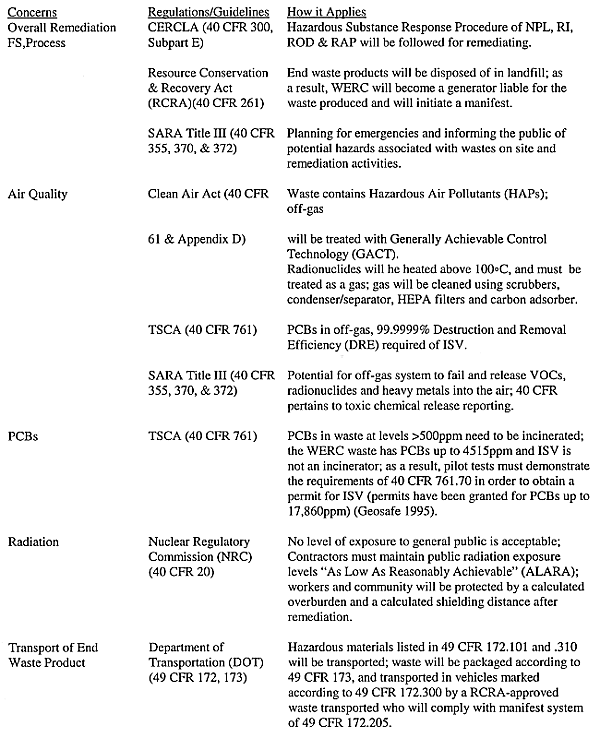
The overall remediation process has been designed with particular emphasis on safety of workers during all phases of operation. Team industrial hygienists worked hard to identify potential hazards and minimize them. This project should be conducted in compliance with all applicable federal and state regulations for safe work practices as well as the health and safety program developed by our industrial hygienists. Appropriate regulations include subparts of OSHA general industry standards (29 CFR 1910), OSHA construction standards (29 CFR 1926) and NRC regulations for radiation (10 CFR 20). The internal Health and Safety Program developed by our team is meant to be implemented and maintained by a Certified Industrial Hygienist (CHI) working for the consulting firm who operates on this site. In addition the Health and Safety Program will be made available to federal, state, and local agencies and authorities, and any sub-contractors. This report will help workers and local authorities to anticipate, identify, evaluate, and control hazards, along with providing for proper emergency response. Details of the program include monitoring during remediation, the use of administrative and engineering controls to minimize exposures, and actions to be taken if an emergency occurs. Site workers may be exposed to electrical hazards, radiation, airborne particles, PCBs, heavy metals, and VOCs during the remediation process. Radionuclides pose the greatest risk to workers on the site due to alpha, beta, Bremsstrahlung, and gamma radiation (21).
Monitoring: Continuous air quality monitoring of off-gas treatment system effluent, perimeter monitoring, and daily personal exposure monitoring will be performed to comply with federal and state regulations. Effluent from the off-gas system will undergo continuous isokinetic monitoring. All employees will wear film badges to detect beta, gamma, and Bremsstrahlung radiation (29 CFR 1910.96). Air monitoring near the parallel HEPA filters (Fig. 1) will be performed to avoid exposures during filter changes. Personal protection equipment (PPE) will be used initially, until monitoring deems it unnecessary. The ISV control operator will shut down the process immediately if monitoring reveals any air contamination above safe levels. In addition, complete records of employee exposures will be maintained as outlined by OSHA.
Administrative Controls: Employee training, scheduling, and job task identification are all highlights of the administrative controls. All site workers are required to take the OSHA 40 hour training course in handling hazardous waste (29 CFR 1910.120). Internal training will address hazard awareness for lead (40 CFR 1926.62), vinyl chloride (1926.1117), cadmium (1926.1127), and benzene (1926.1128); the use of Material Safety Data Sheets (MSDS); the purpose of proper use of PPE; and work zone and Right-to-Know issues. It will also be used to prevent exposure during maintenance procedures. Respirators will be used in accordance with OSHA 1910.134. Scheduling and job task modification can also be used to reduce employee exposure. To prevent migration of contamination caused through tracking of contaminated soil by personnel or equipment, work area and PPE will be clearly identified. Hence, the contamination-reduction zone will be the area between the exclusion zone and support zone where employees will be required to go through a decontamination process.
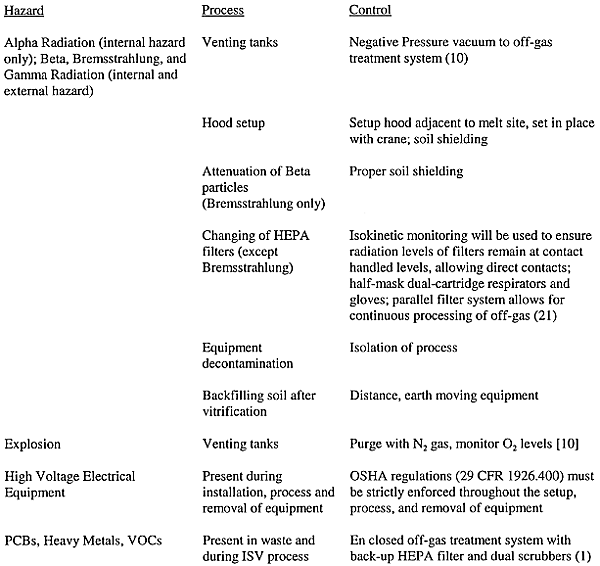
Engineering Controls: Exposures to radionuclides, VOCs, and heavy metals will be minimized by various control methods. An additional hood, attached to the off-gas treatment system, will be set up over the unvitrified portions of the tanks requiring more than one set. Upon setup, the ISV process will be carried out by employees in an isolated control trailer. After initiation of the melt, employees will only come near the melt to replenish the electrode feeds (when applicable) (1). Control techniques for major hazards are summarized in Table III. In addition, a site safety and health plan, as outlined in OSHA 1910.120, and "worst case" shielding calculations for beta, gamma, and Bremsstrahlung radiations (2-9) for Tanks 1-4 before and after remediation, will be available during operations.
TABLE III Controls for Major Remediation Process
Hazards
COMMUNITY RELATIONS
Community relations are an integral part of the design process of a hazardous waste treatment system. Input from the community should be sought when choosing and implementing a treatment system. The Clarkson team chose a very unique and innovative approach to this task. A community meeting was held on February 29, 1996 during the early stages of the design process. Approximately fifty members of the Clarkson and Potsdam community were assembled for a presentation of various treatment options and the teams recommendation. Major concerns of the community were quality control during the treatment process, institutional controls to control site access over time, the quality of the treated off-gas air, who pays for the treatment in the long run, emergency evacuation plans, and a general concern over radiation containment. Following the meeting, citizens in attendance voiced their approval of the recommended ISV operation on the condition that their concerns be adequately addressed. The design team also acknowledged the continuous need for community involvement as mandated by CERCA amended by SARA Title III. Brochures and an 800 number are included in the team's continuous plan to keep the community involved.
CONCLUSIONS
Overall, the ISV process proposed by the Clarkson student design team offers the most effective alternative considered in terms of protection of environmental and public safety. It is a proven technology that has been applied to other sites with mixed hazardous and radioactive wastes with outstanding results. The ISV process design incorporates the key elements of the ISV process, including site preparation, proper electrode spacing, off-gas hood design, air treatment system, and site closure activities such as construction of a flexible membrane barrier and short- and long-term QA/QC for all four final vitrified monoliths. In addition, careful consideration was given to the health and safety of all personnel on-site, and procedures to minimize worker exposure were integrated into the final design. Community involvement in the process has already been initiated through a public meeting to inform the citizens (a sample group composed of members of the Clarkson and Potsdam, NY community) of the proposed remedial action and to address their questions and concerns. This community meeting was a valuable learning tool for both students and citizens. Community involvement would be continued throughout the project duration, and long after project completion.
REFERENCES
ACKNOWLEDGMENTS
This report is based on the work performed by 17 Clarkson University students whose entry in the WERC 1996 International Environmental Design Contest, April 22-25, 1996 in Las Cruces, NM took first place and best bench scale for Task 1. They are: Joel Bianchi, Elizabeth Brown, Jennifer Bump, Siren Chudgar, Scott Davis, Todd Isbell, Marc Kenney, Jay Maggi, Lori Parisi, Eric Pond, Bob Sawmiller, Brian Skidmore, Aleks Stefaniak, Mike Valent, Jason Vogel and John Whitney. I would also like to acknowledge our faculty advisers Dr. S.E. Powers and Dr. A.K. Zander