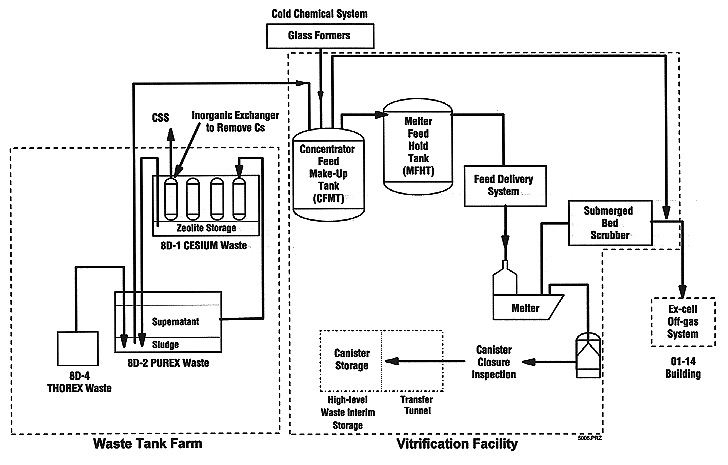
Fig. 1. Vitrification process flow
diagram.
David K. Ploetz
West Valley Nuclear Services Company,
Inc.
ABSTRACT
The construction of the Vitrification Facility (VF) at the West Valley Demonstration Project (WVDP) site in West Valley, NY, was completed in 1995. After nonradioactive testing with simulated waste, the VF was put into radio-active operation in July 1996. Design glass production rates of approximately 30 kilograms per hour were achieved shortly after the start of radioactive operations. The available operating experience is outlined for the vitrification process flowsheet, including high-level waste mobilization and transfer, melter feed preparation, glass production in the slurry-fed ceramic melter, off-gas treatment, and canister handling.
INTRODUCTION
In the WVDP vitrification process, radioactive, high-level waste (HLW) is mixed with glass-forming chemicals and the resultant mixture is subsequently melted and cast into stainless steel containers. The radioactive constituents of the waste are encapsulated by the solidified glass, permanently isolating them from the environment. During storage, most of the radioactive constituents decay within a few hundred years.
The WVDP vitrification process is comprised of the following systems (see Fig. 1) which must work together in an integrated manner to produce solidified HLW:
Fig. 1. Vitrification process flow
diagram.
Vitrification Process Flow Diagram
The following sections describe the current performance of each system during radioactive operations as compared to its functional requirements and past performance duringnonradioactive testing.
HLW MOBILIZATION AND TRANSFER SYSTEM
The HLW mobilization and transfer system removes the HLW from Tank 8D-2 and transfers it to the Vitrification Facility (VF). The HLW is mobilized by at least four 150 hp mixing pumps installed in the tank. Once fluidized, the HLW slurry is transferred through double-walled piping contained in underground concrete trenches and pits to the concentrator feed makeup tank (CFMT) located in the VF confinement cell.
A discussion of the performance of the HLW mobilization and transfer system is included with the melter feed preparation system.
COLD CHEMICAL SYSTEM
The cold chemical system consists of 10 tanks and the material-handling systems that are used to make up each batch of glass formers. The melter feed recipe calls for making up the batch of glass formers as a slurry of individual chemical constituents, as compared to glass frit, in which the glass formers are already combined. After each batch is made up, the glass formers are transferred to the melter feed preparation system where they are combined with concentrated HLW. Glass formers make up approximately 60 to 75percent by weight of the final HLW glass product.
One unique feature of this system is the ability to receive and handle up to 14 separate chemicals that must be precisely measured and mixed to produce a batch of glass formers. The West Valley Demonstration Project (WVDP) adopted the use of raw chemical constituents in its development of a glass recipe based on a requirement for the capability to adjust the glass-former additives. This was done to maintain the final glass composition within a narrowly defined range in order to optimize the performance of the glass in the federal repository. Variability among the batches of HLW transferred to the melter feed preparation system requires the ability to tailor each batch of glass formers to match the HLW composition.
MELTER FEED PREPARATION SYSTEM
The melter feed preparation system consists of two tanks: the CFMT and the melter feed hold tank (MFHT). The CFMT receives HLW slurry from the Waste Tank Farm (WTF) at a concentration of approximately 12 percent by weight suspended solids. It concentrates the dilute HLW slurry by evaporation to approximately 40 to 50 percent by weight suspended solids, then the concentrated HLW is mixed with the batch of glass formerstransferred from the cold chemical system. The mixture is held in the CFMT until the batch is certified through sample analyses for use as melter feed. The MFHT is used to hold a batch of melter feed after it has been prepared in the CFMT and to meter the feed to the melter.
Many process steps are performed in preparing a batch of melter feed in the CFMT. Optimization of the performance of these process steps, in the cold chemical system and the CFMT, has been successful in reducing batch cycle times, as shown in Table I.
Table I Melter Feed Preparation Cycle Time
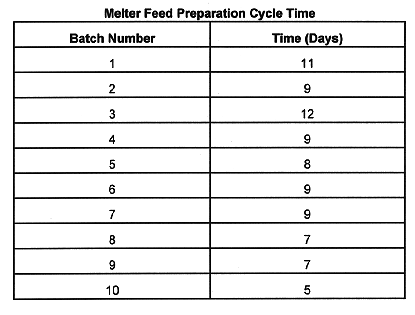
Batch cycle times in the CFMT have been reduced by:
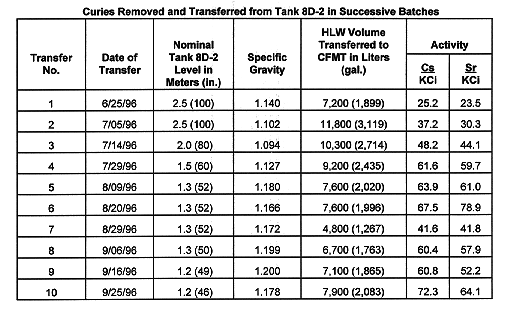
Productivity has been enhanced by making up larger batches of melter feed. Long-shafted centrifugal pumps are used to mobilize the HLW solids in the bottom of Tank 8D-2 before slurrying the HLW to the CFMT in the VF. Techniques that were previously developed during the transfer of HLW from other tanks to Tank 8D-2, such as reducing the level of liquid in the tank prior to transfer, are used to increase the solids concentration. This action increases the total number of curies removed and transferred from Tank 8D-2 to the VF for solidification. The dramatic improvement in the number of curies of radioactivity transferred in each batch of HLW to the CFMT as a function of one of the key variables, tank level, is shown in Table II.
Table II Curies Removed and Transferred from Tank 8D-2 in Succesive Batches
After receipt of HLW in the CFMT, the dilute HLW is sampled and then concentrated by evaporation. The rate of evaporation of water is controlled by regulating the pressure of the steam in the CFMT's side and bottom steam jackets. Controlling steam pressure instead of temperature in the CFMT steam jackets provides smoother operation. Steam flow-rates initially begin at 1,000 kilograms per hour (kg/hr) (2,300 pounds per hour [lb/hr])and slowly decrease to 300 kg/hr (700 lb/hr) as the tank level decreases (uncovering the side steam jacket) over an approximately two-day period. Steam flow-rates are purposely kept low, thereby avoiding rapid boil up which may cause carryover of solids into the condensate system. The rate of concentration is also controlled by a steam pressure regulator setting of 1.8 kilograms per square centimeter (kg/cm2) (25 pounds per square inch [lb/in2]), which was determined to prevent over-stressing the tank nozzles due to thermal expansion. The rate of concentration is also heavily influenced by the amount of agitation. The CFMT is equipped with a double-bladed agitator. The rate of concentration is highest when both agitator blades are submerged. The rate quickly decreases when the upper agitator blade is above the liquid surface. If the agitator is temporarily stopped, evaporation essentially ceases due to a significant reduction in heat transfer. The rate of concentration temporarily increases if the agitator blade is only partially submerged. This phenomenon is believed to be caused by the sloshing of concentrated HLW onto the inside walls of the CFMT. The concentrated HLW runs down the heated walls as a film and partially evaporates.
After concentration of the HLW, the batch of glass formers is added to the CFMT. The combined waste-glass-former mixture is then sampled and analyzed before acceptance of the batch as prepared melter feed. After acceptance, the batch is transferred to the MFHT. No further chemical additions or physical changes are made to a batch of melter feed once it is approved. The MFHT is equipped with an agitator to maintain the solids slurry in a homogeneous suspension.
Melter feed is metered from the MFHT to the melter using an air-operated, positive-displacement pump. A small quantity (i.e., 1.4 to 1.7 liters (l)) of melter feed fills the pump chamber then air is used to displace the melter feed and push it through a 1.0 centimeter (cm) diameter pipe into the melter. A pulse of melter feed is transferred to the melter every 50 to 70 seconds. The air pressure used to displace the melter feed is adjusted so that there is sufficient pressure to overcome pump head requirements. Too much pressure can cause spraying of melter feed into the melter, leading to entrainment of particulate into the off-gas treatment system. The amount of air flow to the pump is also restricted for the same reason. Because the flow of the melter feed is discontinuous, a conventional flow meter does not provide an accurate measurement. Since the volume of each pulse is relatively constant, the instantaneous flow rate is calculated by multiplying the volume of each pulse by the number of pulses per hour. The average flow rate is calculated based on the rate of level decrease in the MFHT. Flow of melter feed into the melter is confirmed by monitoring the air pressure displacing each pulse of melter feed and by level, pressure, and temperature changes in the melter.
SAMPLING SYSTEM
Samples are routinely taken from the CFMT for process control. Pulses of HLW or melter feed are transferred through piping to a slurry sample station using the same type of air-operated, positive-displacement pump used to transfer feed to the melter. Samples of slurry are diverted into a 14 milliliter (ml) glass sample vial using a sampler that was custom-designed for remote operation and maintenance based on operating experience. Its use has resulted in a four-fold improvement in sampling time.
The glass sample vials are placed inside polyethylene containers and pneumatically conveyed to the Analytical Labs using the same sample transfer system that was previously used to transfer thousands of samples during HLW pretreatment.
MELTER
The melter is the heart of the vitrification system. It is a joule-heated, ceramic-lined furnace; that is, the glass is heated by passing electric current through the glass melt.
Glass Production Rate
The melter glass production rate is controlled by the ability of the melter to process the slurry feed into borosilicate glass. Steady-state glass production rates comparable to the design production rate of 30 kg/hr have been achieved and, at times, even exceeded. The melter-feed rate is adjusted to maintain a relatively constant melter plenum temperature of approximately 400 to 600°C. Melter glass temperature is controlled by adjusting the current passing through the glass to maintain an average pool temperature of 1,150°C. Increasing the current passing through the glass will not significantly raise the glass-production rate but will elevate the glass temperature.
As melter feed is added to the melter, the water in the feed is evaporated. The remaining solids lie on the cold cap and slowly melt into the glass pool. The rate of melting is affected by the temperature of the glass in direct contact with the cold cap. The glass at the interface is constantly being swept away by natural convection currents in the glass pool. The driving force for this glass circulation is the temperature difference between the cold cap and the glass pool. Due to the viscous nature of the molten glass, the time that it takes for a unit of glass to recirculate from the electrode (hottest temperature) to the cold cap (coolest temperature) and back to the electrode is on theorder of hours.
The glass-production rates are also influenced by the size of the cold cap on the top of the glass melt, which is controlled by adjusting the melter feed rate and monitoring the temperatures in the glass melt/plenum. Ideally, the cold cap covers 70 to 90 percent of the surface of the glass pool. If, however, the cold cap bridges (that is, reaches 100 percent coverage), pressure surges may eventually result and the melter-feed rate must be temporarily reduced to allow the edges of the cap to melt. The presence of the cold cap also reduces spraying of melter feed by reducing melter plenum temperature and suppresses volatilization of cesium and other volatile elements in the glass melt.
Glass Pouring
The molten glass/HLW mixture is batch-poured into a stainless steel canister about once every six hours to maintain the glass level in the melter within a 2.5-cm (1-in) range. Glass pouring is controlled using an airlift. Air bubbles introduced through tubing into the molten glass cause the glass to rise and overflow onto the pour trough. The molten glass stream then flows off the end of the trough and falls approximately 2 meters through the heated melter discharge section into the canister located directly beneath the trough (see Fig. 2).
The glass level in the canister is monitored using an infrared camera. The infrared camera scans the canister surface and detects an increase in the surface temperature as thermally hot glass is poured into the canister. The scanned image of the canister is displayed in the VF Control Room. The glass level is calculated by the infrared camera control system and can also be determined visually using fixed reference points located near the top of the canister. The Defense Waste Processing Facility (DWPF) at Savannah River has adopted this same method for monitoring the glass level in their canisters based on the favorable experience at the WVDP. The glass in the canister rapidly cools and solidifies before the next pour.
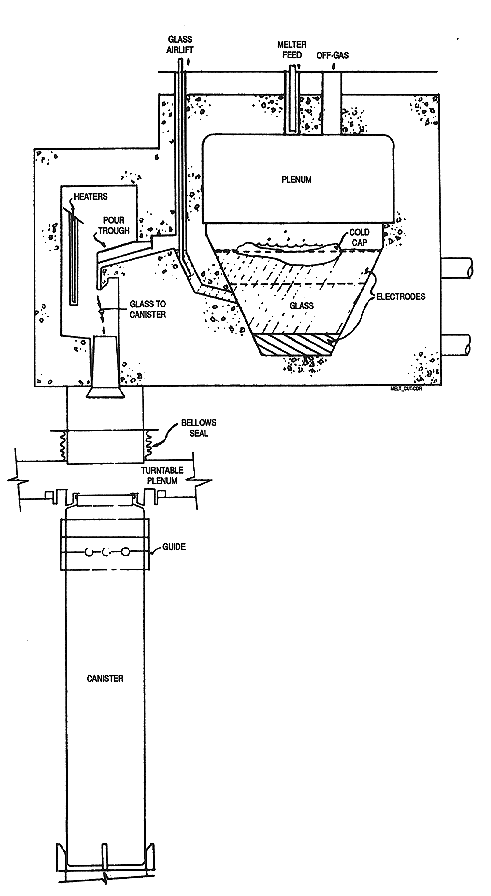
Fig. 2. Cross section of the melter,
showing a canister in the pour position.
Glass pouring is visually confirmed and monitored by closed-circuit TV (CCTV). Normally, the image of the glass stream is vertical as it falls straight down into the canister. During nonradioactive testing, it was discovered that excessive airflow from the cell confinement atmosphere into the melter discharge caused the glass-pour stream to deflect. Airflow into the melter discharge was subsequently restricted from 100 to 10liters persecond by installing a flow orifice, thus eliminating the potential for excessive deflection of the glass stream. Restricting the airflow rate also minimized the formation of thin filaments of glass at the end of pouring. These filaments of glass have the potential to build up and form a low-density accumulation of glass that can cause deflection of the glass-pour stream.
No irregularities in the glass-pour stream which are potential indications of an obstruction or partial blockage, have been observed during radioactive operations.
Melter Pressure/Temperature Control
Pressure fluctuations of 2.5 to 5.0 cm (1 to 2 in. water column [WC]) in the melter are normal. These are the result of pressure fluctuations arising in the submerged bed scrubber (SBS) and the response of the melter pressure control system to the flashing of the water into steam from each pulse of melter feed into the melter. Pressure fluctuations caused by other factors have been effectively mitigated by tuning the melter pressure control system and by minimizing the effect of external pressure sources; for example, staggering the periodic blowdown of tank level bubblers and reducing airflow during blowdown. The glass level in the melter is maintained so that these pressure fluctuations do not cause the inadvertent pouring of glass. However, pressure fluctuations in the melter will cause the glass stream leaving the melter discharge section to waver from side to side during a pour.
The melter discharge section is equipped with eight heaters to keep the glass-pour stream above 1,050°C so that it flows freely. As these heaters age, the voltage required to maintain a given temperature increases to a maximum of 240 volts, after which the heaters require replacement. The estimated heater operating life is nine to ten months. Replacement of these heaters requires removing the lid covering the melter discharge. The exposed refractory lining inside the melter discharge cools down to 200°C during heater replacement. The rate of heatup of the melter discharge after reinstallation of the heaters is critical to maintaining the integrity of the metal plate separating the glass pool in the melter from the melter discharge. The metal plate prevents uncontrolled migration of glass from the melter into the melter discharge. Detailed thermal-stress analyses performed on this metal plate indicated that extended hold times are required at elevated temperatures (i.e., 550°C and 800°C) in order to relieve thermal stresses in the metal plate.
The melter is equipped with removable inserts that contain level-, density-, and temperature-sensing instrumentation and glassairlift tubing. These inserts gradually corrode and require replacement about every 24 weeks. The surfaces of the inserts, which are exposed to the melter environment, are fabricated from Inconel-690. The melter nozzles through which the inserts are installed are lined with a remotely removable Inconel-690 liner. The Inconel-690 melter electrodes are permanently installed in the melter. Similar electrodes installed in a full-scale test melter exhibited minimal corrosion after fiveyears of operation.
MELTER OFF-GAS TREATMENT SYSTEM
The melter off-gas treatment system performs three primary functions: it quenches the off-gas stream, filters out particulate, and destroys nitrogen oxides (NOx).
Evaluation of the performance of the melter off-gas treatment system in performing each of these separate but related functions is discussed below.
Off-gas Piping
Plugging of the off-gas piping upstream from the quenching operations is a common occurrence in slurry-fed, ceramic melters.
Increased differential pressure, between the melter plenum and the SBS, has been caused by two different mechanisms:
Melter-feed slurry is atomized or splashed in the melter plenum and transported from the melter into the 15 cm diameter off-gas pipe jumper connecting the two vessels, where it gets deposited. (A jumper is a pipe or conduit that is remotely replaced using a crane and impact wrench.)
Melter feed that is deposited at the off-gas jumper inlet is exposed to high melter temperatures (i.e., 1,000°C). The melter feed deposited at the inlet quickly turns into glass which makes removal extremely difficult. The film cooler located at the inlet to the off-gas jumper was designed to prevent melter-feedbuildup at the pipe inlet and to cool the gases leaving the melter. The film cooler is also equipped with a cleaner that regularly brushes any deposits from the film cooler. Nonradioactive testing of the production melter showed insignificant buildup of dried melter feed and glass on the film cooler during normal operations.
Once during nonradioactive testing of the production melter, a buildup of dried melter feed was discovered at a location downstream of the inlet to the off-gas pipe jumper. The factors leading to the deposition of solids at this location were determined to be:
The melter feed pump was operating at a supply line pressure of 4.2kg/cm2 (60 lbs/in2). This caused a greater percentage of melter-feed slurry entering the melter plenum to become atomized and available for transport from the melter plenum to the off-gas pipe jumper.
There was higher-than-desired airflow through the melter plenum due to excessive air leakage into the melter that increased the rate at which atomized melter feed was transported to the off-gas pipe jumper.
The off-gas pipe jumper was removed, cleaned, and reinstalled prior to commencement of radioactive operations. The melter-feed pump pressure was reduced to 2.0 kg/cm2 (28 lb/in2), and was tested to verify that this pressure was optimal for reducing the spraying of melter feed into the melter plenum. Airflow through the melter plenum was also reduced by the installation of a flow-restricting orifice. No further buildup of solids in the off-gas pipe jumper was detected during nonradioactive testing. This was concluded based on monitoring the pressure drop resulting from the flow of off-gas through the pipe jumper.
Shortly after beginning radioactive operations, a restriction to flow in the off-gas pipe jumper was detected. Direct radiation measurements confirmed that solids had accumulated at a piping bend.
A flushing technique was developed for removing this accumulation of solids and restoring the normal melter off-gas flow rate. Flushing can be performed while the melter is being fed without disruption of melter operation. This technique consists of the injection a mixture of water and air directly into the off-gas pipe jumper. The water dissolves the condensed salts and loosens the dried melter feed. In less than 15 minutes, the solids are dislodged and flushed from the off-gas pipe jumper into the SBS. Additionally, a tool has been developed for remotely cleaning out the off-gas pipe jumper if the solids cannot be removed byflushing with water. This custom-designed reaming tool is on the end of a flexible shaft that can be remotely inserted into the off-gas pipe jumper. The reaming tool first bores a hole through the solids and then enlarges the hole using a whipping action. Full-scale mockup testing of the cleaning tool has demonstrated that it can remove essentially all hard material deposits from the jumper without necessitating removal of the off-gas pipe jumper. Finally, a restriction orifice was installed to limit airflow to the melter feed pump and mitigate spraying of melter feed into the melter. Also, water is now fed to the melter before initiating melter feed in order to reduce plenum temperatures and mitigate spraying. There has been no detectable increase in solids accumulations since these changes were implemented.
Quenching/Filtration
The quenching/filtration portion of the melter off-gas treatment system consists of the SBS, high-efficiency mist eliminator (HEME), and high-efficiency particulate air (HEPA) filters. The SBS contains a flooded bed of ceramic spheres through which the melter off-gas percolates. The melter off-gas is quenched from up to 400°C to less than 45°C by the aqueous scrubber solution.
Melter feed is transferred to the melter as approximately a 40 to 50 percent by weight water slurry. The water in the melter feed is evaporated in the melter and partially condensed in the SBS. Because the scrubber condensate that collects in the SBS ultimately ends up being recycled back to the melter, close attention has been paid to minimizing the accumulation of water in the SBS.
The SBS packed bed is maintained at a temperature of approximately 43°C. At this temperature, water is condensed at a rate which is 3 to 4 times less than that which was previously experienced at a temperature of 35°C. The off-gas is heated above its dewpoint to prevent condensation in the remainder of the off-gas system. Consequently, more of the evaporated water vapor travels through the remainder of the melter off-gas treatment system and, after treatment in the NOx removal destruction system, is discharged to the atmosphere.
The SBS effectively removes greater than 99 percent of the particulate. Solids collected in the SBS are periodically transferred back to the CFMT where they are combined with the melter feed and recirculated back to the melter. The solids are mobilized before transfer using a custom-designed, swirling action.
Nox Destruction
The NOx abatement portion of the melter off-gas treatment system consists of a catalytic converter containing a specially designed catalyst. The melter off-gas is heated to approximately 320°C, passed through a series of HEPA filters, and passed over the catalyst. In the presence of ammonia, the NOx is reduced to nitrogen and water vapor.
The WVDP site has a NOx-release limit of 91 metric tons per 12-month period. Melter off-gas contributes approximately one-half of the NOx released from the WVDP site. Abated NOx emissions from the vitrification process have typically been less than 1 ton per month. The WVDP abates NOx below permit requirements as a best management practice.
The NOx removal system was oversized to dampen out fluctuations or spikes in the concentration of NOx present in the melter off-gas. During initial radioactive operations, NOx destruction efficiencies ranged from 50 to 80 percent at a 10 percent excess concentration of ammonia, with a gradual increase in NOx destruction efficiency over time. This is because the catalytic converter bed becomes more efficient as it becomes saturated with ammonia. Full-scale testing of the NOx destruction system during radioactive operations verified that optimal NOx destruction efficiencies were achievable with initially higher ammonia concentrations. Even though there are no specific operational requirements for NOx destruction efficiency, NOx destruction efficiencies have been generally increased to greater than 90 percent by temporarily increasing the concentration of up to 50 percent excess ammonia. As the bed becomes saturated with ammonia and becomes more efficient, the ammonia-to-NOx ratio can gradually be reduced. The injection rate of ammonia into the melter off-gas stream is automatically controlled to match the NOx concentration. On-line process analyzers continually monitor the concentration of NOx at the inlet and outlet of the catalytic converter bed, and the concentration of ammonia in the effluent.
CANISTER CLOSURE AND DECONTAMINATION
Cooled, filled canisters are removed from underneath the melter and transferred to the weld station. The level of solid glass inside the canister is measured for official reporting requirements, and samples of glass fragments are taken for analyses/archiving. A 42-cm diameter, stainless steel lid is then placed over the canister opening. The lid is permanently sealed to the canister using a pulsed-gas tungsten arc welding process without using filler metal. Welds produced during qualification testing using this same welder/weld process met the repository criteria for leak tightness. Structural strength of the weld was demonstrated by burst-test pressures that exceeded84 kg/cm2 (1,200 lbs/in2), which is greater than the side wall strength of the canister.
The quality of the canister lid weld is assured by process control of the weld parameters. A visual inspection is performed of the completed weld and a computer printout of weld parameters is reviewed to assure that critical process parameters are maintained within the ranges shown in Table III.
Table III Canister Lid Welding Parameters
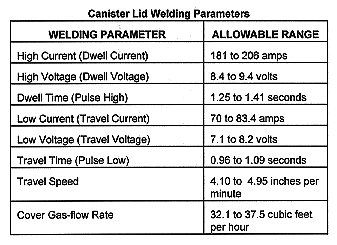
Canister lid welds that exhibit weld parameters outside the above ranges are rewelded using the same weld process. Rewelding of canister lids was included as part of the original weld qualification and testing program. Four of 23 canister lids welded have required rewelding to date, and three of these canisters required rework because the voltage was out of tolerance by less than 2 percent. The fourth canister was rewelded because the welder automatically stopped during the weld process due to low voltage. This condition may have resulted from a failed electrical part, which was subsequently diagnosed and replaced. After rewelding, the sealed HLW canisters still conformed to waste acceptance requirements. The ease of reworking a canister lid by rewelding is one of the major advantages of the canister lid weld system.
CANISTER DECONTAMINATION SYSTEM
After the canisters are sealed by welding, they are moved to the canister decontamination system. Here, the canisters are soaked for six hours in a bath heated to 65°C containing nitric acid and ceric nitrate. The canisters are then removed from the bath and rinsed with nitric acid and demineralized water.
This process removes the oxide layer from the surface of the stainless steel canister, effectively removing surface contamination. These conclusions are based on the results of developmental testing at Pacific Northwest National Laboratories (PNNL) and the WVDP. Smear surveys of the canisters taken before and after decontamination confirm this conclusion.
Pre-rinsing the canister with water prior to decontamination has no significant effect on the subsequent performance of the ceric nitrate, nitric-acid process.
CANISTER HANDLING SYSTEM
All canister movements inside the VF and HLW Interim Storage (HLWIS) Facility for temporarily storing filled HLW canisters are accomplished by remotely operated overhead cranes. A shielded tunnel connects the VF to the HLWIS Facility. A radio-controlled, battery-powered transfer cart was designed, fabricated, and tested for the transfer of canisters of vitrified HLW from the VF to the HLWIS Facility, as well as for transferring empty canisters into theVF.
No problems have been experienced with the operation of the overhead cranes or the transfer cart since the start of radioactive operations, except for premature battery failure on one occasion that required remote recovery of the transfer cart. The transfer cart has operated satisfactorily since replacement of the battery pack.
CONCLUSION
The WVDP vitrification process systems have been performing as designed since initiating radioactive operations. Strict adherence to design requirements, integrated testing during nonradioactive operations, and strong problem-solving skills were the key factors contributing to the WVDP's success. As of February 1, 1997, 70 canisters of HLW have been solidified and are in temporary storage awaiting repository availability.
ACRONYMS
CCTV Closed-circuit TV
CFMT Concentrator Feed Makeup Tank
Cs Cesium
CSS Cement Solidification System
DWPF Defense Waste Processing Facility
HEME High-efficiency Mist Eliminator
HEPA High-efficiency Particulate Air
HLW High-level Waste
HLWIS High-level Waste Interim Storage
MFHT Melter Feed Hold Tank
NOx Nitrogen Oxides
PNNL Pacific Northwest National Laboratories
SBS Submerged Bed Scrubber
VF Vitrification Facility
WC Water Column
WTF Waste Tank Farm
WVDP West Valley Demonstration Project